- Published on
Kapuche Glacier Lake Trek: Guide to the Lowest Glacial Lake in the World
- Authors

- Name
- Pratap Sharma
- @pratap2210
- Website
- https://pratapsharma.io
The Kapuche Glacier Lake trek is one of Nepal's most exciting emerging trails — a short, scenic route through Gurung villages and alpine forest to a milky turquoise lake sitting at the foot of a living glacier. Often called the lowest-altitude glacial lake in the world, Kapuche (also spelled Kaphuche or Kahphuche) lies northeast of Sikles village in Kaski district, inside the Annapurna Conservation Area.
Unlike the crowded ABC or Poon Hill circuits, this trail is still remote, quiet, and refreshingly uncrowded. You walk stone-paved paths through lush forest, overnight in simple teahouses at Hugu Goth, and reach a lake where avalanches from Annapurna II and Lamjung Himal occasionally feed fresh ice and snow onto the moraine above the water.
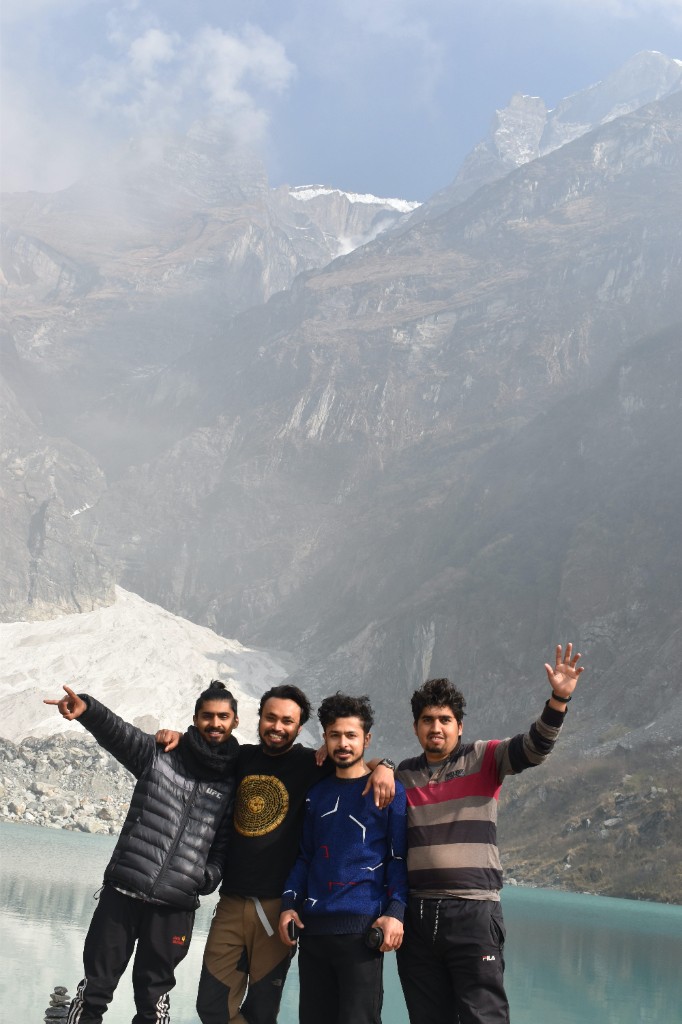
I first hiked this route in April 2023 with three friends — Suraj, Ramesh, and Roshan — and it quickly became one of my favourite short treks near Pokhara. We went without a guide (a group of four), rode bikes from Pokhara, slept through an unplanned afternoon on the trail, met a dog named Sere at Hugu Goth, and still talk about the moment the glacier came into view above the lake.
This guide blends that first-hand experience with practical planning — full itinerary, difficulty, permits, best season, and how to fit Kapuche into a Pokhara trip. I also published a longer photo journal from the same trek on my personal blog if you want the full story.
Gallery
Kapuche Glacier Lake Trek at a Glance
| Detail | Info |
|---|---|
| Duration | 3–4 days on trail (round trip from Pokhara) |
| Distance | ~25–35 km round trip (varies by route) |
| Max altitude | ~2,450–2,546 m (8,038–8,356 ft) at Kapuche Lake |
| Difficulty | Moderate — steady uphill, forest trails |
| Start point | Sikles village (drive from Pokhara via Khilang) |
| Accommodation | Teahouse lodges in Sikles and Hugu Goth |
| Best season | October–November & March–May |
| Permits | ACAP required (Annapurna Conservation Area) |
Why I Keep Recommending This Trek
Before the logistics, a few moments that stuck with me long after we drove back to Pokhara:
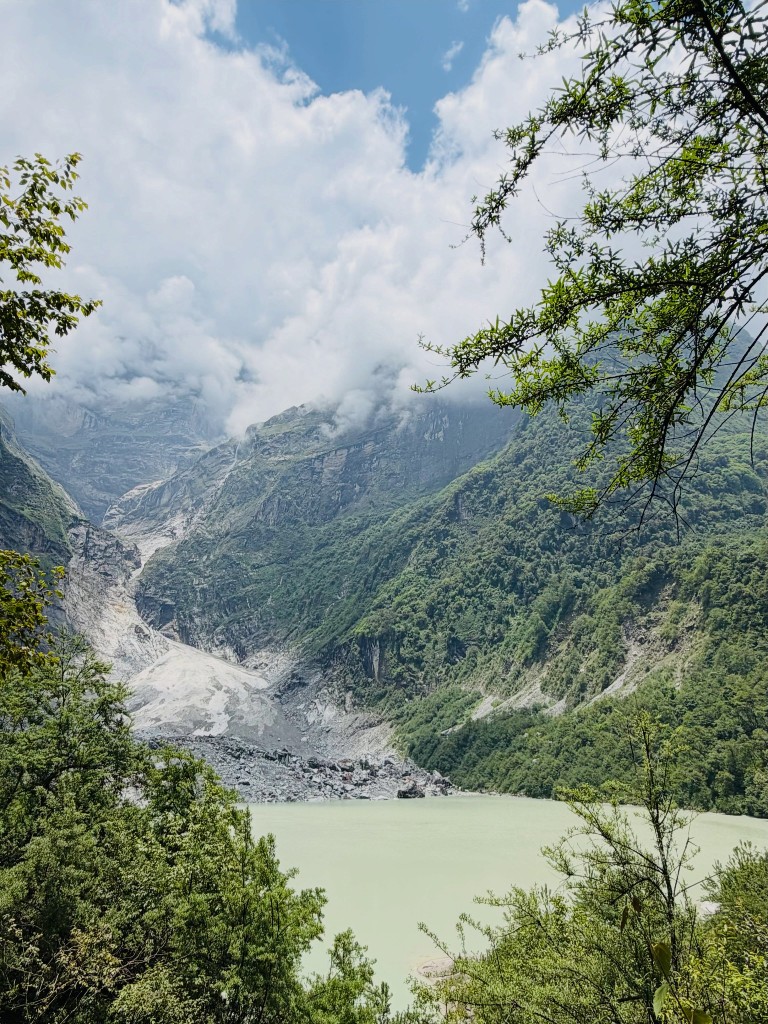
- The lake reveal — after two hours of forest walking from Hugu Goth, the trail opens and the milky turquoise water appears below a hanging glacier. It does not feel real at first.
- The quiet — we saw almost no other trekkers on the trail. Compare that to ABC or Poon Hill and the difference is immediate.
- Sikles as a destination — the Gurung village is worth the trip on its own. Terraced fields, traditional houses, and a museum that gives real context to the culture of the hills.
- Small adventures — road construction forced us off the bike early, we napped on the side of the trail, rain hit Hugu Goth by evening, and we lit a bonfire to warm up. None of that was in the plan. All of it made the trek memorable.
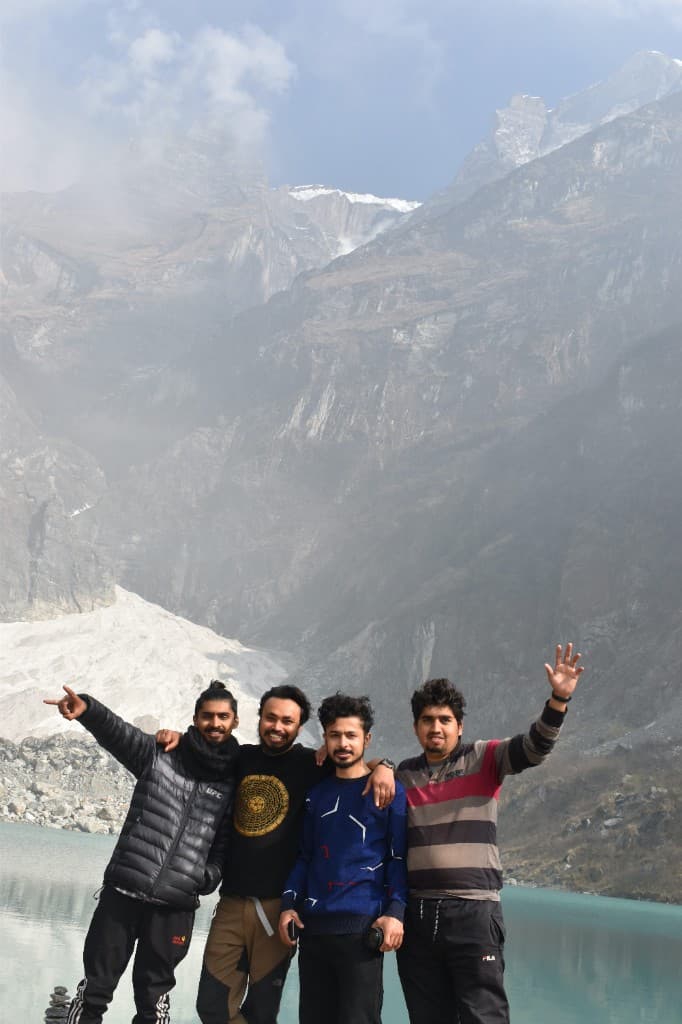
If you want grand scenery, a trail that still feels undiscovered, and a lake unlike anything else in the Annapurna foothills, Kapuche delivers.
Why Trek to Kapuche Glacier Lake?
Kapuche is not just another mountain lake. A few things set it apart:
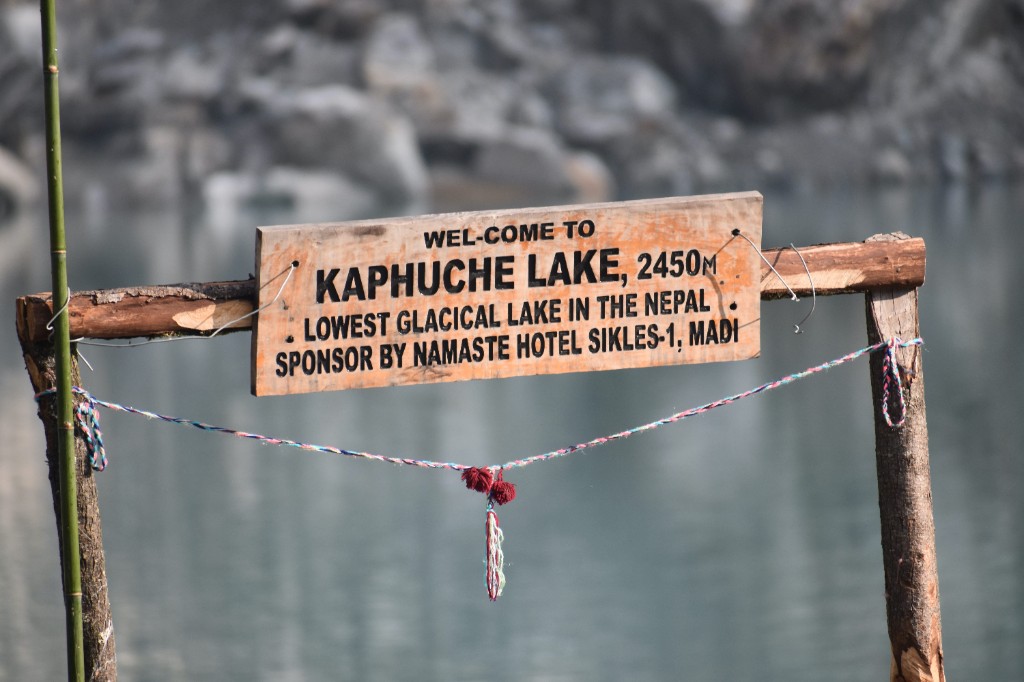
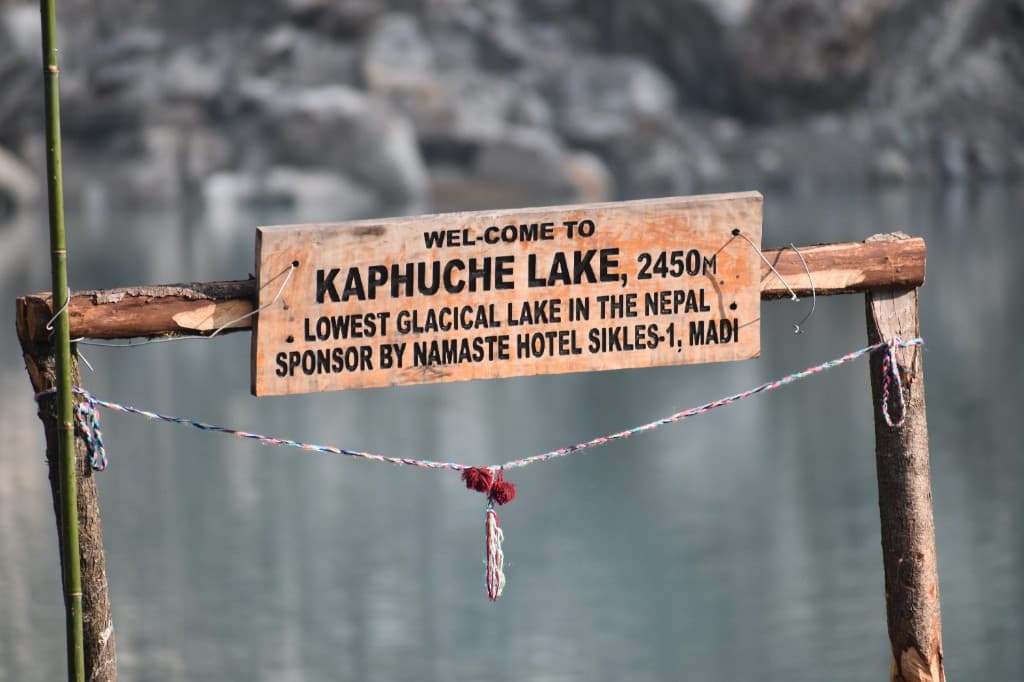
- Lowest glacial lake claim — official signage and local promotion describe Kapuche as the lowest-altitude glacier lake in the world, with the lake surface around 2,421–2,546 m depending on the survey point
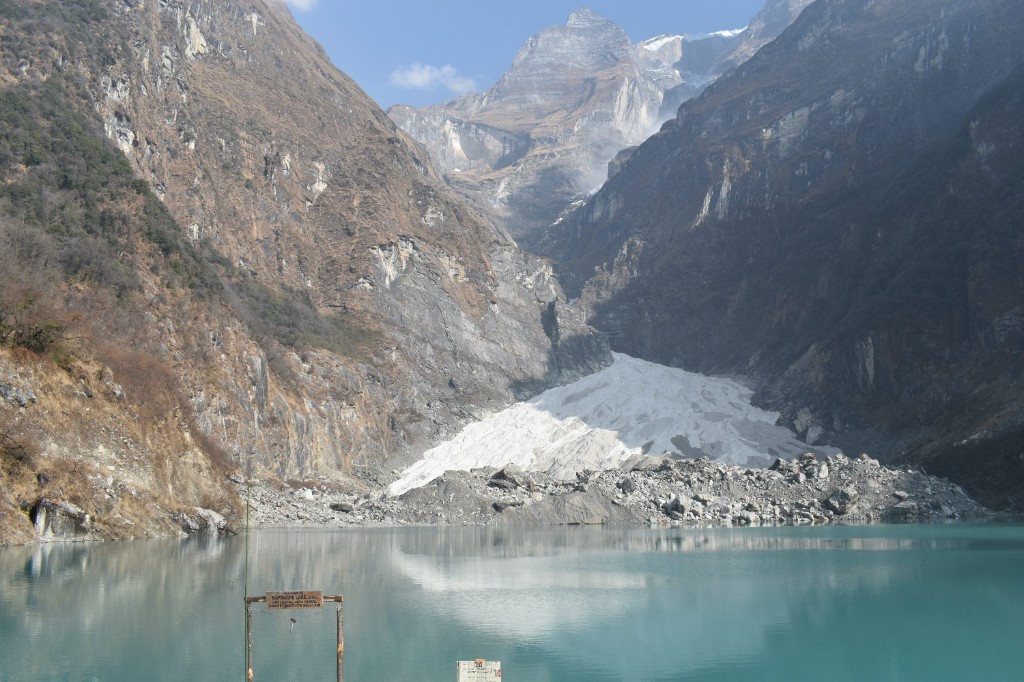
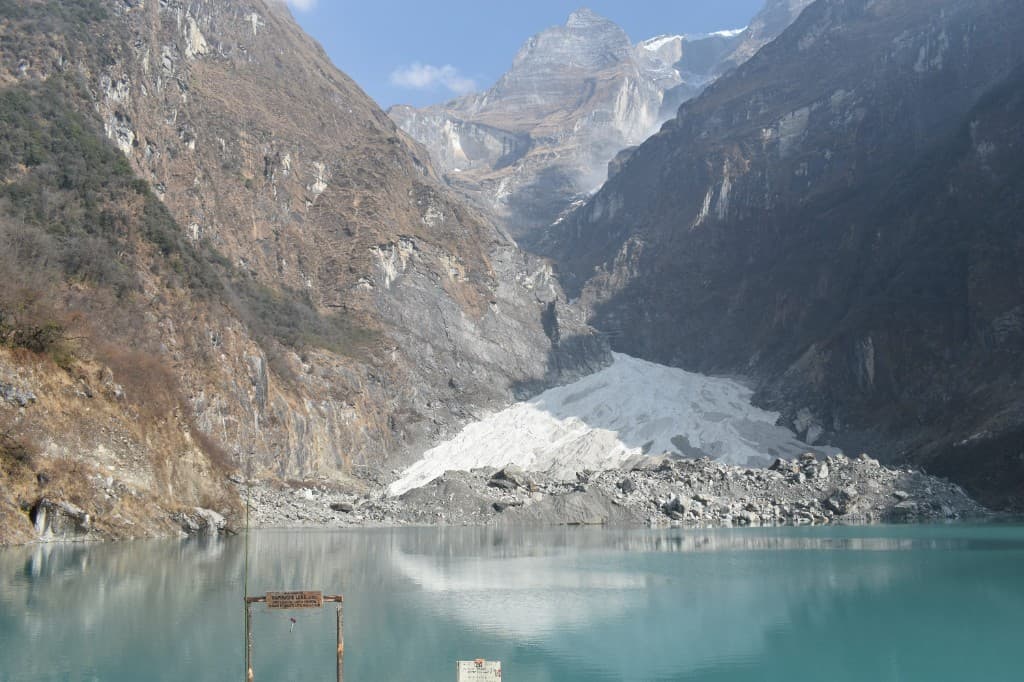
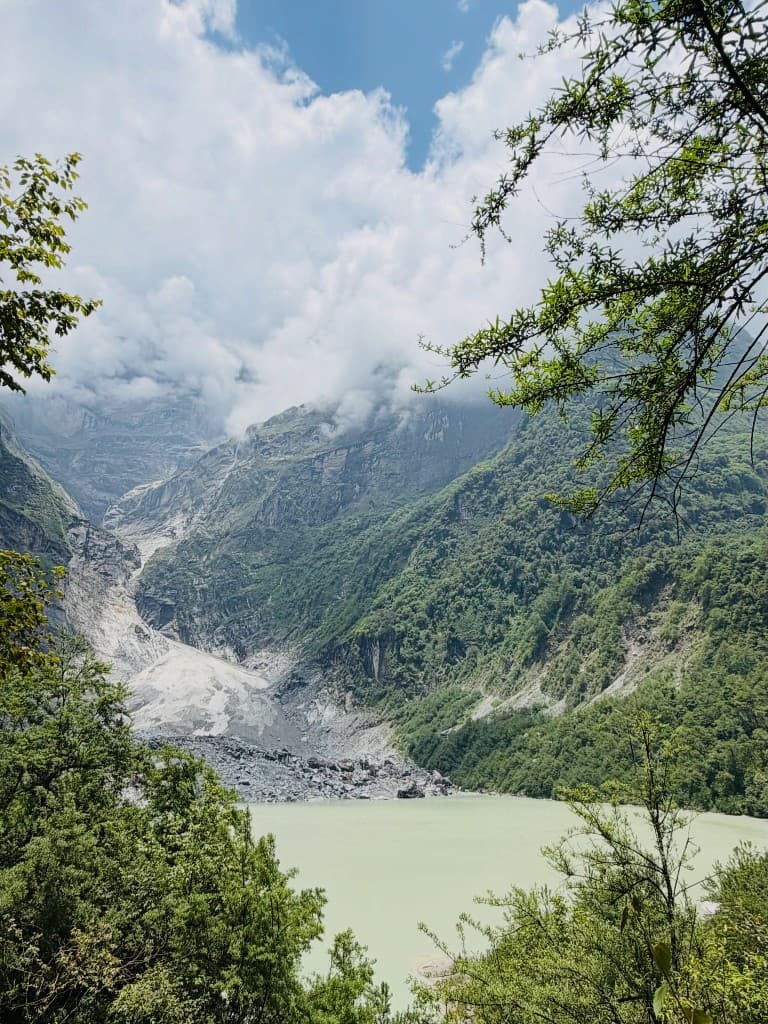
- Living glacier — a glacier tongue descends directly into the rocky moraine at the far end of the lake; winter temperatures can freeze the surface
- Milky turquoise water — glacial silt gives the lake its distinctive opaque blue-green colour
- Quiet trail — far fewer trekkers than ABC, Poon Hill, or Mardi Himal
- Cultural depth — the route passes through Sikles, one of the largest and best-preserved Gurung villages in the Annapurna foothills
- Short but rewarding — reach the lake in roughly two hours from Hugu Goth, making it achievable in a long day hike or a relaxed multi-day trek
Location and Altitude
Kapuche Glacier Lake (कपुचे हिम ताल) sits in Madi Rural Municipality, Sikles, Kaski district, within the Annapurna Conservation Area northeast of Pokhara.
Altitude figures vary slightly across trail signs and surveys:
| Source | Elevation |
|---|---|
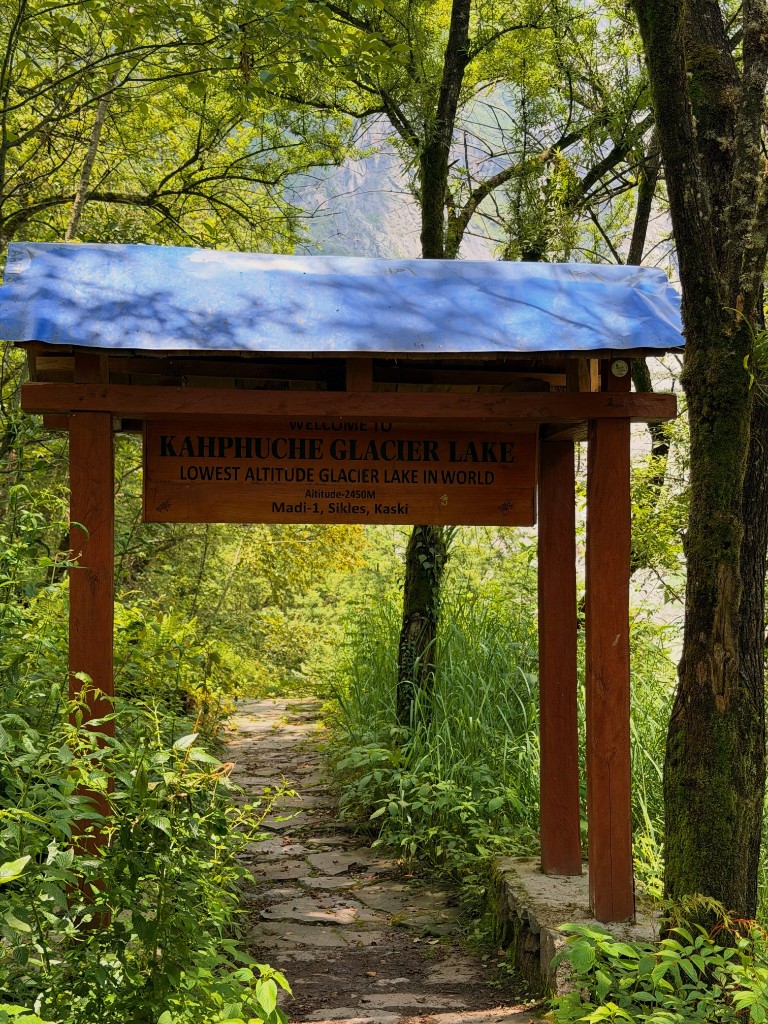
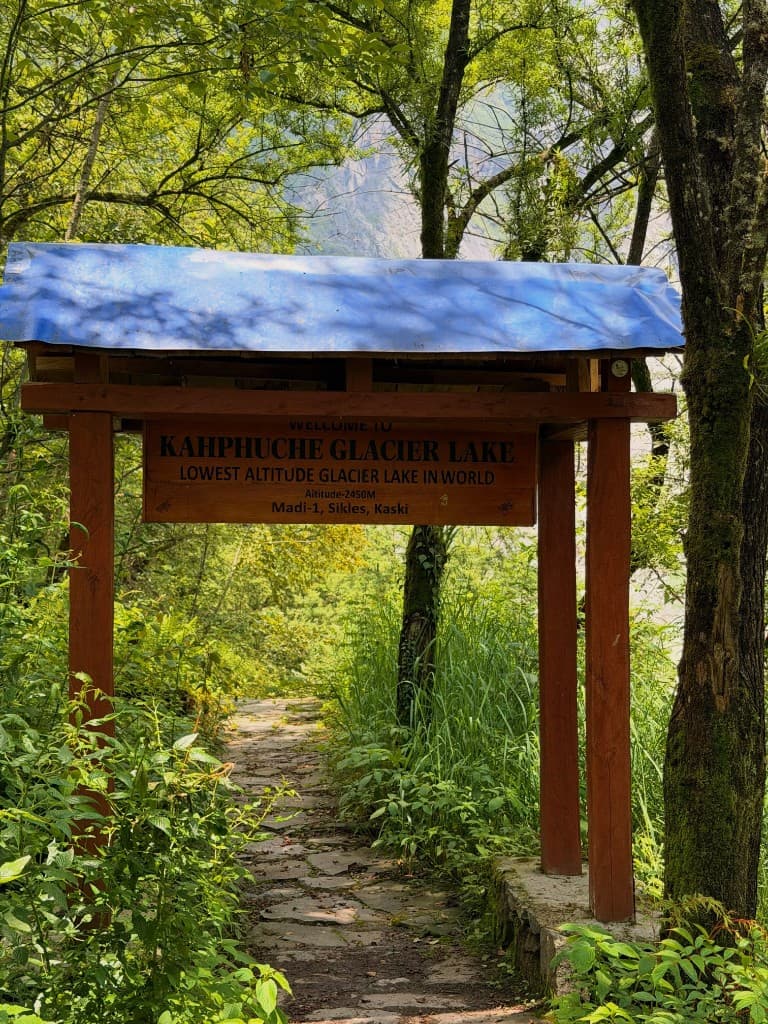
| Trail welcome gate (Sikles) | 2,450 m |
| Lake welcome sign | 2,450 m |
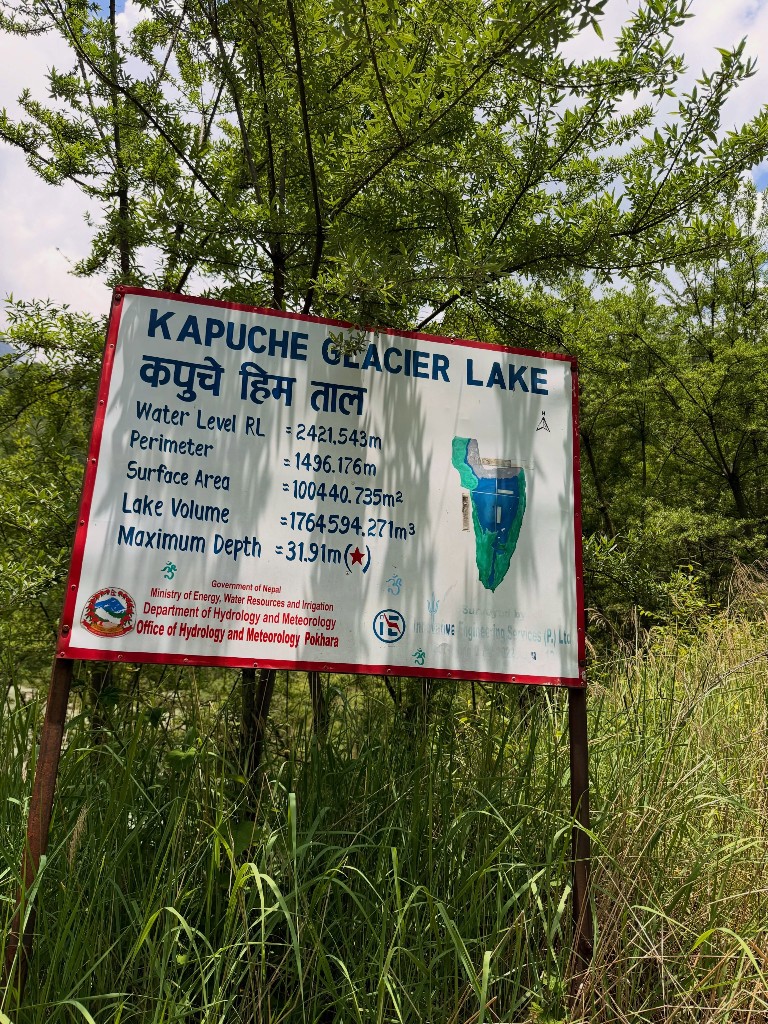
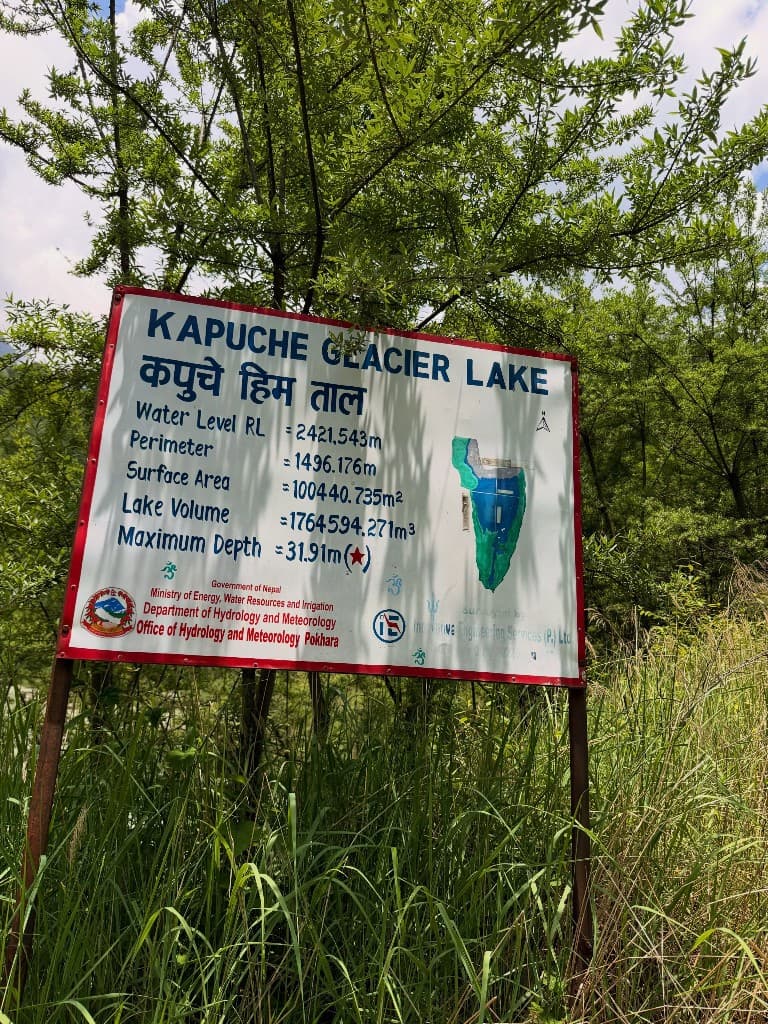
| Government hydrology board (water level RL) | 2,421.5 m |
| Some trekking references | up to 2,546 m |
The lake has a maximum depth of about 32 m and a surface area of roughly 100,000 m² — small by Himalayan standards, but remarkable for sitting so low yet still fed by an active glacier.
How Difficult Is the Kapuche Trek?
The Kapuche Glacier Lake trek is rated moderate. The trail mostly follows grassland ridges, forest paths, and stone steps through hills rather than exposed high-altitude ridgelines.
What to expect:
- Daily walking: 4–6 hours on approach days; ~2 hours from Hugu Goth to the lake
- Terrain: Stone-paved trails, forest sections, some steep uphill stretches
- Altitude: Under 2,600 m throughout — low risk of serious altitude sickness
- Remoteness: Fewer lodges and fellow trekkers than mainstream routes; navigation can be tricky in cloud or rain
Good cardiovascular fitness and broken-in trekking boots are enough for most hikers. Trekking poles help on the stone steps and descent.
Do You Need a Guide?
A guide is not legally mandatory for trekkers with valid ACAP permits, but it is strongly recommended if you are in a group of fewer than three people. The trail is less commercialised than ABC or Poon Hill, signage can be sparse in places, and weather changes quickly in the forest sections.
For groups of three or more with some trekking experience, self-guided travel is more feasible. Our group of four managed fine without a guide — but I would not recommend going solo. Hiring a local guide from Sikles supports the community and adds cultural context to the walk.
4-Day Kapuche Glacier Lake Itinerary
This is the route we followed — Sikles → Hugu Goth → Kapuche Lake → back to Pokhara. I have added notes from our April 2023 trek where they might save you a surprise or two.
Day 1: Drive to Khilang — Trek to Sikles
We rode motorbikes from Pokhara to Khilang — about two hours on winding hill roads. The plan was to ride all the way to Sikles, but road construction blocked the route, so we parked at Khilang and started walking the old village trail instead.
What we expected to be a short transfer turned into a 4–5 hour trek. The trail is scenic — stone steps, forest, river crossings — but it is a proper walk. I was tired enough that I literally stopped and slept on the trail for a while. If your jeep cannot reach Sikles, budget a full afternoon for this section.
We reached Sikles around 4:00 pm, checked into Dudh Pokhari Lodge, and crashed early after dinner. Worth it.
Sikles itself is a beautiful Gurung settlement — traditional houses, terraced fields, and views of the surrounding hills. If you arrive with energy to spare, explore before dark.
Walking time: 4–5 hours (if trekking from Khilang)
Overnight: Dudh Pokhari Lodge or similar teahouse in Sikles
Day 2: Trek to Hugu Goth
We took the morning slowly — breakfast, then a walk through Sikles Park — and started toward Hugu Goth around 11:00 am. No rush, but I would start earlier if I did it again.
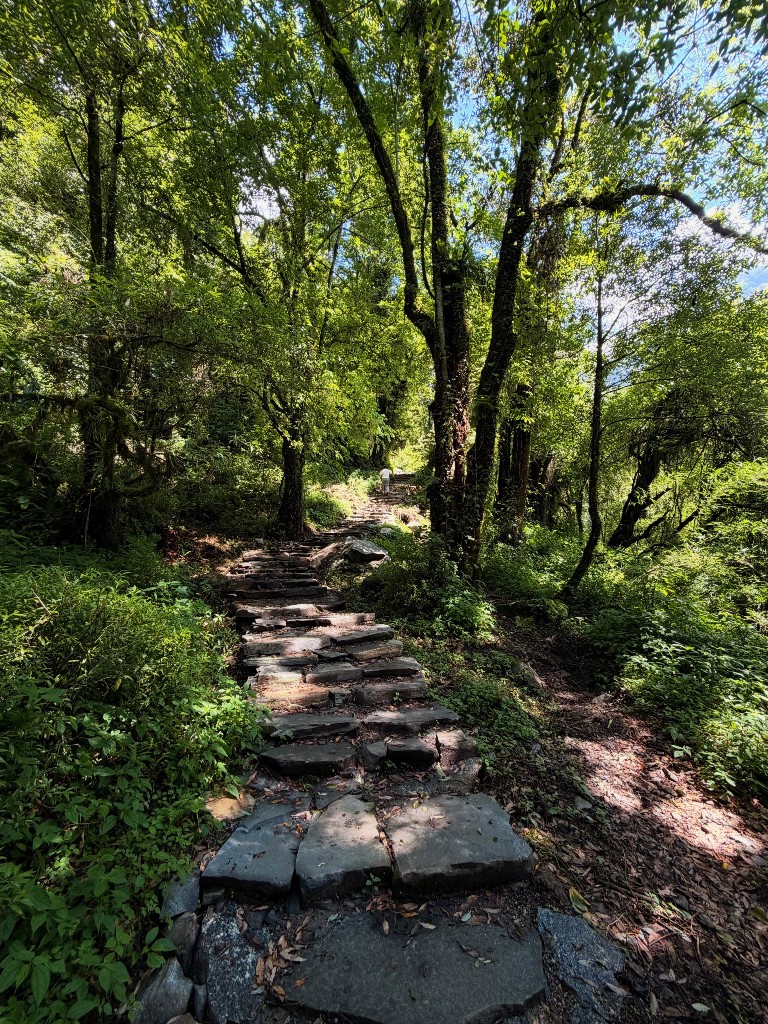
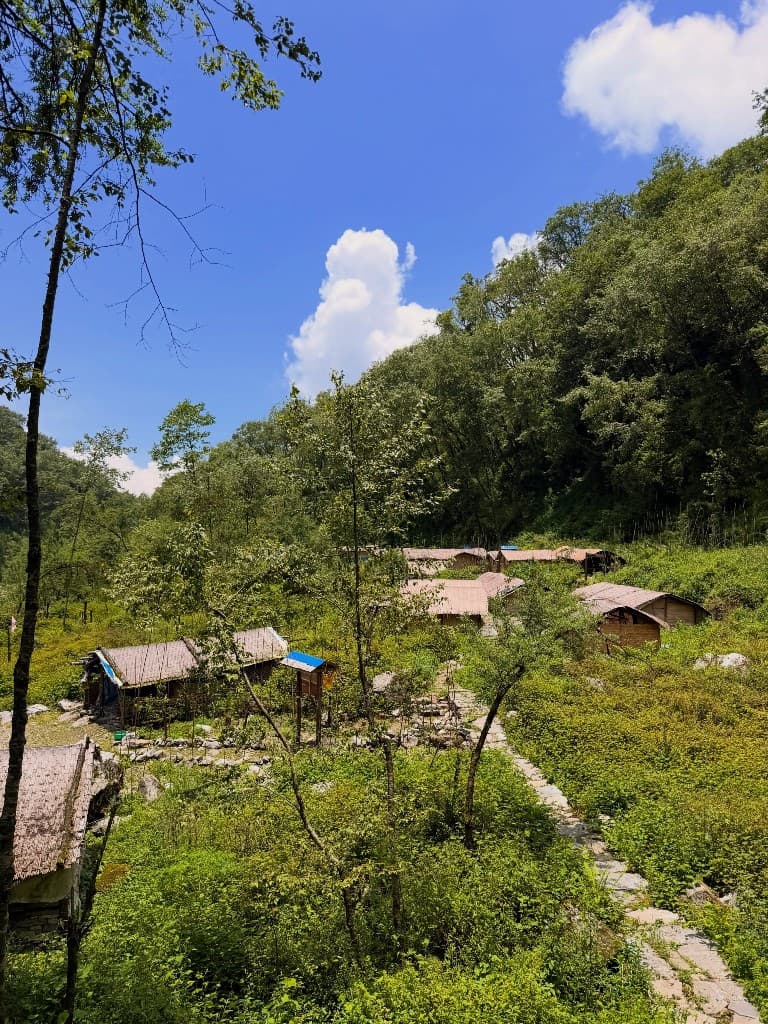
The climb toward Hugu Goth winds through dense forest with stone steps, river crossings, and occasional clearings with mountain glimpses. This was my favourite walking day on the trail.
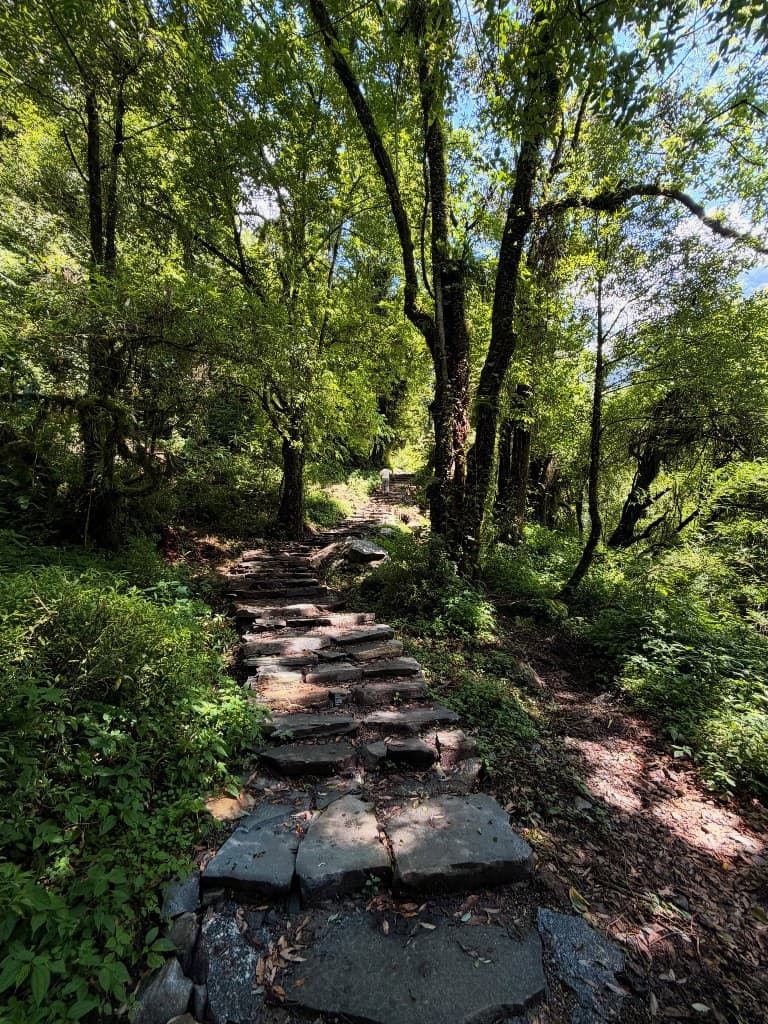
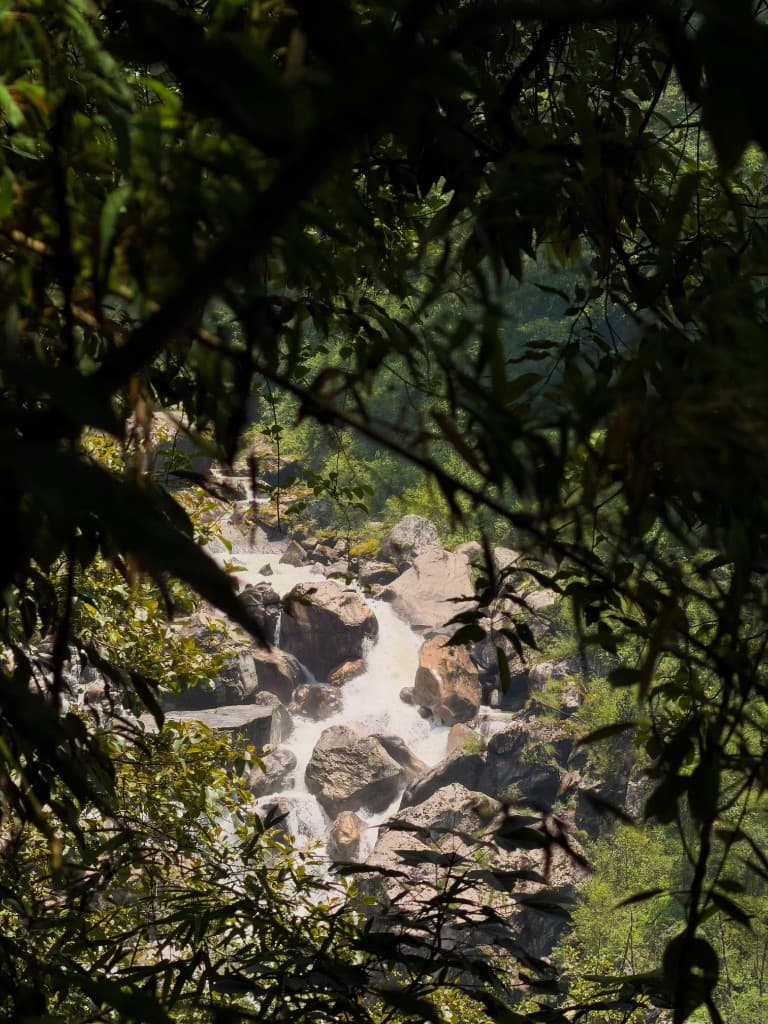
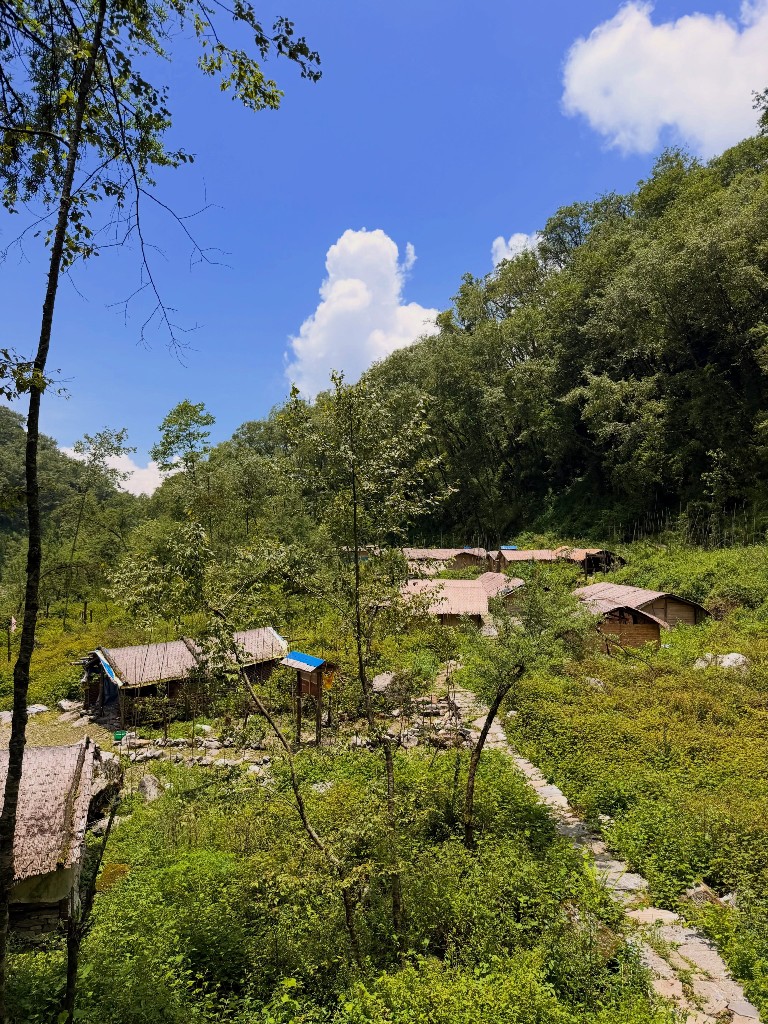
We trekked for about four hours and reached Ice Fall Cottage in Hugu Goth by 3:00 pm. A friendly dog greeted us at the lodge — we called him Sere — and he became the unofficial mascot of our stay.
Around 5:30 pm, rain moved in and the temperature dropped fast. We had a light drink, ate dinner, and lit a bonfire to stay warm. Hugu Goth feels remote in the best way. Pack a warm layer and expect the evening to be colder than Pokhara.
Walking time: 4–5 hours
Overnight: Ice Fall Cottage or teahouse at Hugu Goth
Day 3: Trek to Kapuche Lake — Return to Sikles
This is the day you are here for. We were up at 6:30 am, breakfasted, and on the trail early.
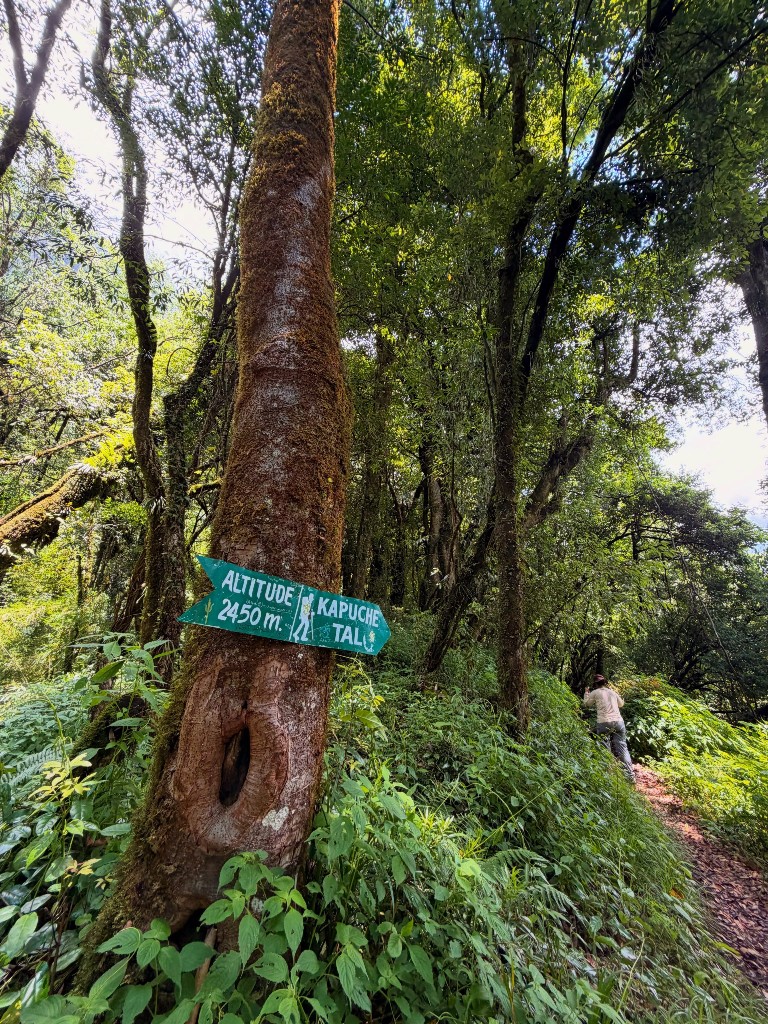
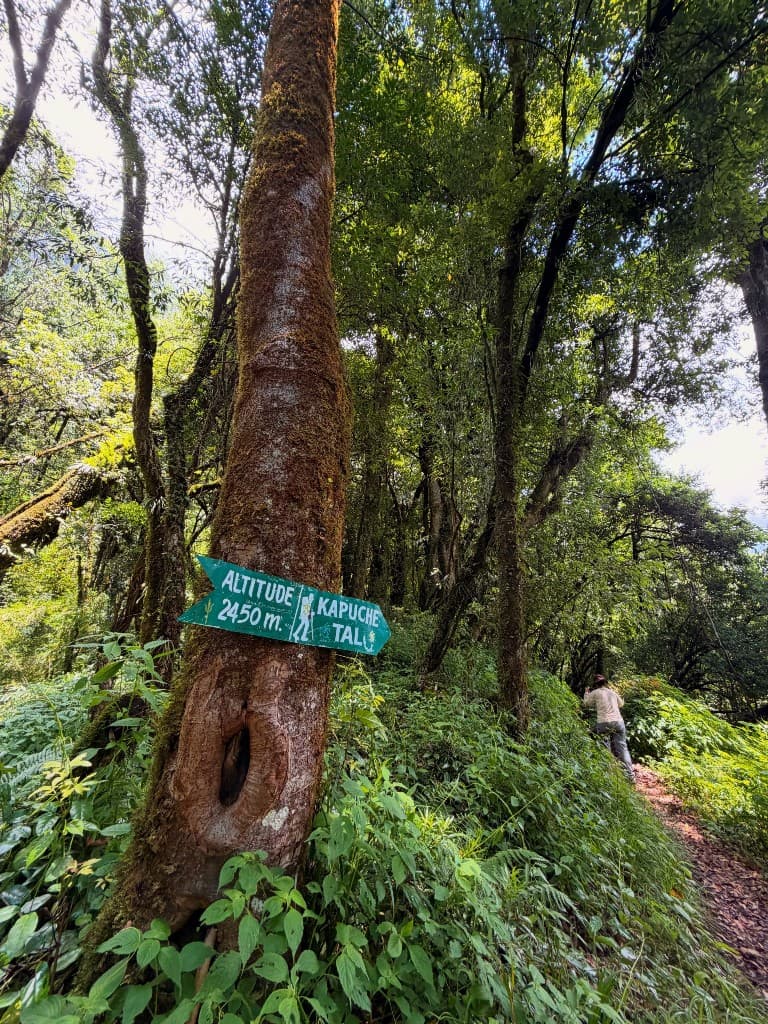
From Hugu Goth, it took us about two hours to reach Kapuche Glacier Lake. The final section follows a forest trail with a signposted milestone at 2,450 m pointing toward Kapuche Tal — a small but satisfying moment before the lake opens up ahead.
We spent roughly two hours at the lake — walking the moraine shoreline, photographing the glacier tongue, and taking in the Annapurna peaks above the basin. The milky turquoise water and the ice above it are genuinely unlike any other lake I have seen in Nepal at this altitude.
Then the long walk back: Hugu Goth for lunch, pack up, and descend to Sikles. We reached Dudh Pokhari Lodge again by around 5:00 pm — tired, happy, and ready to sleep.
Walking time: 6–8 hours total (round trip to lake plus descent to Sikles)
Overnight: Dudh Pokhari Lodge, Sikles
Day 4: Sikles — Khilang — Drive to Pokhara
After breakfast, we toured the Sikles Museum — a worthwhile stop if you want to understand Gurung history and village life before leaving. Then we trekked back to Khilang, picked up the bikes, and rode to Pokhara.
A calm end to a trek that had started with an unexpected afternoon hike and ended with one of the best lake views in the Annapurna foothills.
Walking time: 2–3 hours to Khilang
Drive: Khilang to Pokhara, ~2 hours
Shorter Option: 3-Day Trek
If you are short on time and fit, compress the route:
| Day | Route |
|---|---|
| Day 1 | Drive to Sikles, overnight |
| Day 2 | Sikles → Hugu Goth → Kapuche Lake → Hugu Goth |
| Day 3 | Hugu Goth → Sikles → Khilang → Pokhara |
This is a demanding Day 2 but avoids an extra night in Sikles.
Kapuche vs Other Short Treks Near Pokhara
| Trek | Duration | Max altitude | Best for |
|---|---|---|---|
| Kapuche Glacier Lake | 3–4 days | ~2,546 m | Glacier lake, quiet trail, Gurung culture |
| Mardi Himal | 4–5 days | 4,500 m | Ridgeline views, higher altitude |
| Poon Hill | 4–5 days | 3,210 m | Easiest intro trek, famous sunrise |
| Annapurna Base Camp | 7–12 days | 4,130 m | Classic sanctuary trek, longer commitment |
Kapuche is ideal if you want glacier scenery without crossing 4,000 m and prefer a trail that still feels genuinely off the beaten path.
Kapuche Trek Cost
Costs depend on group size, season, and whether you hire a guide and porter.
| Item | Typical cost (USD / NPR) |
|---|---|
| Guided trek package (3–4 days) | $200–400+ per person |
| ACAP permit | ~NPR 3,000 (foreigners) |
| Teahouse room | NPR 500–1,500/night |
| Meals on trail | NPR 800–2,500/meal |
| Porter | NPR 2,000–2,500/day |
| Guide | NPR 2,500–3,500/day |
| Jeep Pokhara–Khilang/Sikles | NPR 8,000–15,000 (shared) |
Carry enough NPR cash — ATMs are not available on the trail. Message HolidayKosh on WhatsApp for current Kapuche trek packages and seasonal rates.
Permits for the Kapuche Trek
The route lies inside the Annapurna Conservation Area, so you need:
- Annapurna Conservation Area Permit (ACAP) — issued in Pokhara or Kathmandu
A TIMS card may also be required depending on current Nepal Tourism Board policy — check at the time of booking. Your guide or trekking agency typically arranges permits.
Best Time for the Kapuche Glacier Lake Trek
| Season | Months | Conditions |
|---|---|---|
| Autumn (peak) | Oct–Nov | Clearest skies, stable weather, best lake and glacier views |
| Spring | Mar–May | Lush forest, rhododendron blooms, comfortable temperatures |
| Winter | Dec–Feb | Cold at Hugu Goth; lake surface can partially freeze — dramatic but chilly |
| Monsoon | Jun–Sep | Heavy rain, slippery trails, leeches — not recommended |
October–November and March–May are the ideal windows. Avoid peak monsoon months when forest paths become muddy and cloud obscures the glacier.
What to Pack for Kapuche
Essentials
- Broken-in trekking boots with good grip on stone steps
- Layered clothing (base layer, fleece, light down jacket)
- Waterproof jacket and pack cover
- Warm hat and gloves for Hugu Goth evenings
- Trekking poles for steep forest sections
- Headlamp
- Sunscreen, sunglasses, insect repellent
- Water purification tablets or filter
- Basic first aid kit
Documents & money
- Valid passport or travel document for Nepal entry
- Travel insurance with evacuation cover
- NPR cash for teahouses, meals, and tips
- ACAP permit card
More About Kapuche Glacier Lake
Beyond the trekking experience, Kapuche holds genuine geological interest:
- The lake sits at the lowest known elevation for a glacier-fed lake in the Himalayas — a rarity given most glacial lakes form above 4,000 m
- Winter temperatures at the lake can drop below freezing, occasionally icing the surface
- Avalanches from Annapurna II and Lamjung Himal deposit snow and debris on the moraine above the water
- The government hydrology survey recorded a maximum depth of 31.91 m and lake volume of roughly 1.76 million m³
I published a photo journal from this same trek on my personal blog — same route, same lake, more images from the trail.
Frequently Asked Questions
How long is the Kapuche Glacier Lake trek?
Most itineraries take 3–4 days on the trail, plus travel to and from Pokhara. Allow 5–6 days total including transport and a rest day in Pokhara.
How do I get from Pokhara to Sikles?
Drive by jeep or motorbike to Khilang (~2 hours), then trek or continue by road to Sikles depending on current road conditions. Shared jeeps run from Pokhara's Baglung Bus Park area.
Is the Kapuche trek suitable for beginners?
Yes, with reasonable fitness. The altitude stays under 2,600 m and daily distances are moderate. Hiring a guide is recommended for first-time trekkers on this less-marked route.
Can I do Kapuche Lake as a day hike?
A day hike from Sikles is possible for very fit hikers but is not recommended — the round trip from Hugu Goth alone is 4+ hours, and you need to reach Hugu first. An overnight at Hugu Goth makes the experience far more enjoyable.
What is the water colour of Kapuche Lake?
The lake has a milky turquoise or pale green hue caused by glacial silt (rock flour) suspended in the water — the same effect seen at Tilicho or Gangapurna lakes, but at much lower elevation.
Is Kapuche less crowded than Annapurna Base Camp?
Significantly. Kapuche is an emerging route with far fewer trekkers than ABC, Poon Hill, or Mardi Himal — ideal if you want solitude and pristine scenery.
Final Thoughts
A few years after that April trek, Kapuche is still the short hike I recommend when someone asks for something near Pokhara that is not overrun with groups. It has a living glacier, a turquoise alpine lake, and Gurung village culture — all within a few days of the city and without the noise of Nepal's mainstream trails.
A few things I would do again — and a few I would change:
- Start earlier on Day 2 — we left for Hugu Goth at 11 am and it worked, but an 8 am start would have given us more buffer before rain.
- Assume the road to Sikles might be blocked — have trekking shoes ready even if you plan to drive all the way.
- Stay warm at Hugu Goth — the bonfire was not optional for us once the rain arrived.
- Do not rush the lake — those two hours at the shoreline were the whole point of the trek.
Start early on lake day, pack warm layers for Hugu Goth, and give yourself time at the water's edge. The glacier above the lake is the kind of sight that justifies every unexpected detour on the way there.
Plan Your Kapuche Glacier Lake Trek
- Explore Pokhara destination guide
- Mardi Himal Base Camp Trek guide — higher-altitude alternative nearby
- Annapurna Base Camp Trek guide — classic longer route in the same region
- North ABC Trek to Pancha Kunda — wilder north-side trail
- Adventures in Nepal — full guide
- Summer deals in Pokhara — combine trekking with lake and adventure activities
- Paragliding in Pokhara — post-trek reward
- Bungee jumping in Pokhara
- My Kapuche trek photo journal — more photos from the April 2023 hike