- Published on
Mardi Himal Base Camp Trek: 4 Nights / 5 Days Guide for Indian Travelers
- Authors

- Name
- Pratap Sharma
- @pratap2210
- Website
- https://pratapsharma.io
The Mardi Himal Base Camp trek is one of Nepal's most scenic short Himalayan routes — and one of the best fits for Indian travelers who want real mountain drama without committing to a two-week expedition. In just 4 nights and 5 days from Pokhara, you walk through rhododendron forests and Gurung villages to a viewpoint at 4,500 metres, with Annapurna South, Hiunchuli, and Machhapuchhre (Fishtail) filling the horizon.
This guide covers the full 5-day Mardi Himal itinerary, what makes the trek special, permits and costs, the best season to go, and how to slot it into a week-long Nepal trip from India.
Gallery
Mardi Himal Trek at a Glance
| Detail | Info |
|---|---|
| Duration | 4 nights / 5 days (round trip from Pokhara) |
| Distance | ~35–45 km round trip |
| Max altitude | 4,500 m (14,764 ft) at Mardi Himal Base Camp |
| Difficulty | Moderate — good fitness recommended |
| Start point | Dhampus or Kande (1–1.5 hr drive from Pokhara) |
| Accommodation | Teahouse lodges throughout |
| Best season | October–November & March–May |
| Permits | ACAP + TIMS card required |
Trip Highlights
- Stunning sunrise from Mardi Himal Base Camp at 4,500 m
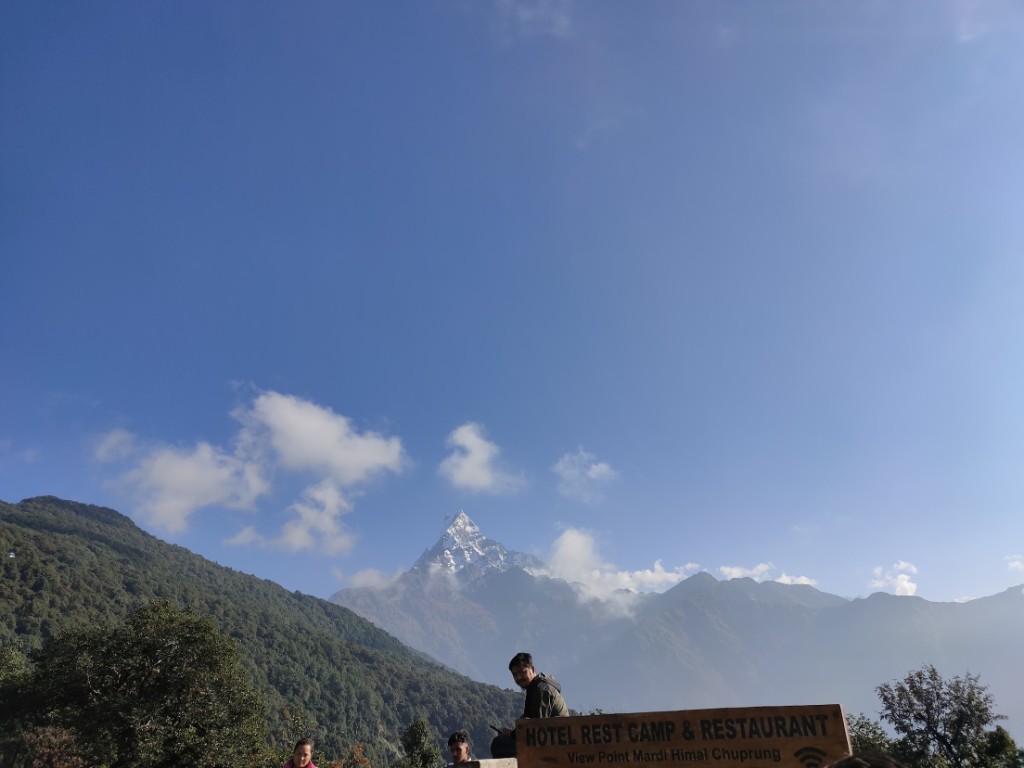
- Panoramic views of Annapurna South, Hiunchuli, and Machhapuchhre (Fishtail)
- Rhododendron forests and traditional mountain villages along the trail
- Comfortable teahouse trekking — no camping gear required
- Suitable for beginners and experienced trekkers with reasonable preparation
- Short and scenic — a complete Himalayan adventure without a long trekking schedule
Why Mardi Himal Is Perfect for Indian Travelers
Nepal is one of the most accessible international treks for Indians — short flights from Delhi, Mumbai, or Kolkata to Kathmandu, or overland entry via Sunauli and Gorakhpur. Pokhara, the gateway to Mardi Himal, is a 1-hour flight or 6–7 hour drive from Kathmandu.
What makes Mardi Himal stand out for travelers from India:
- Time-efficient — the full trek fits in five trail days, so a 7–8 day total trip (including travel) is realistic
- Lower commitment than ABC or EBC — less distance and altitude than Annapurna Base Camp or Everest Base Camp
- Same permit region as ABC — one Annapurna Conservation Area trip can combine with other Pokhara activities
- Teahouse comfort — private rooms and hot meals at every stop; no heavy camping kit to carry
- Excellent value — shorter duration means lower guide, porter, and lodge costs than longer treks
Pair the trek with a day in Pokhara for paragliding, Sarangkot sunrise, or a rest day on Phewa Lake. See our Adventures in Nepal guide for more ideas.
5-Day Mardi Himal Base Camp Itinerary
This is the standard 4 nights / 5 days route used by most operators — starting near Dhampus and exiting via Siding and Lumre.
Day 1: Drive to Dhampus — Trek to Forest Camp
Drive from Pokhara to Dhampus or Kande (about 1–1.5 hours). The road climbs through terraced hills with first glimpses of the Annapurna range.
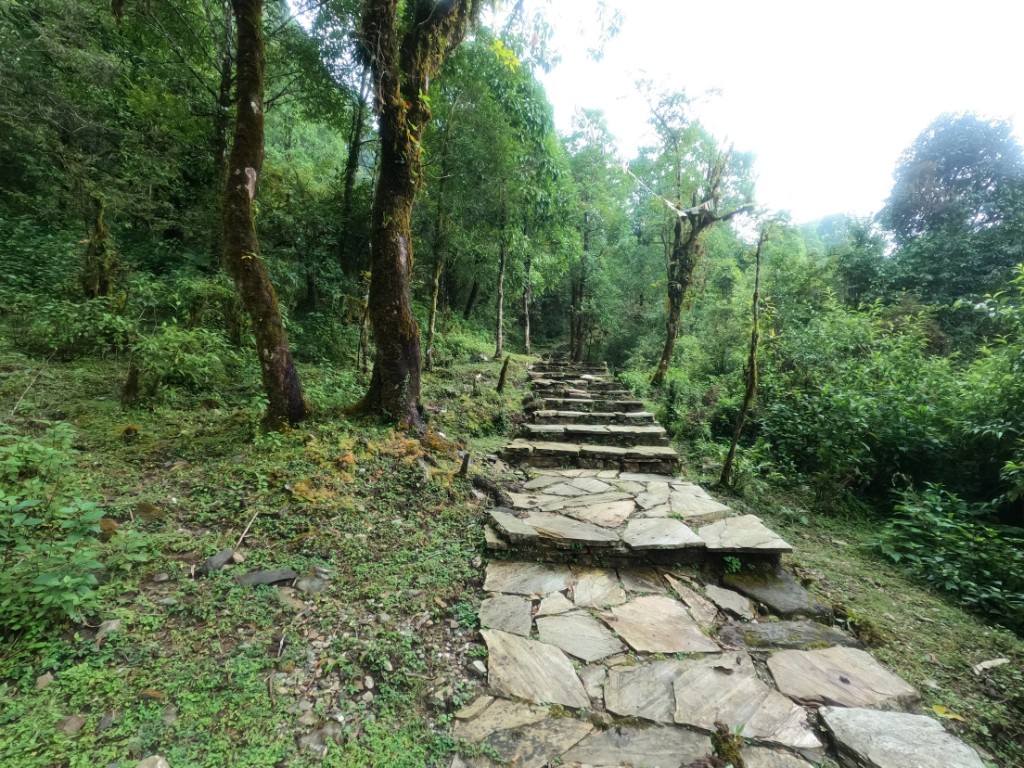
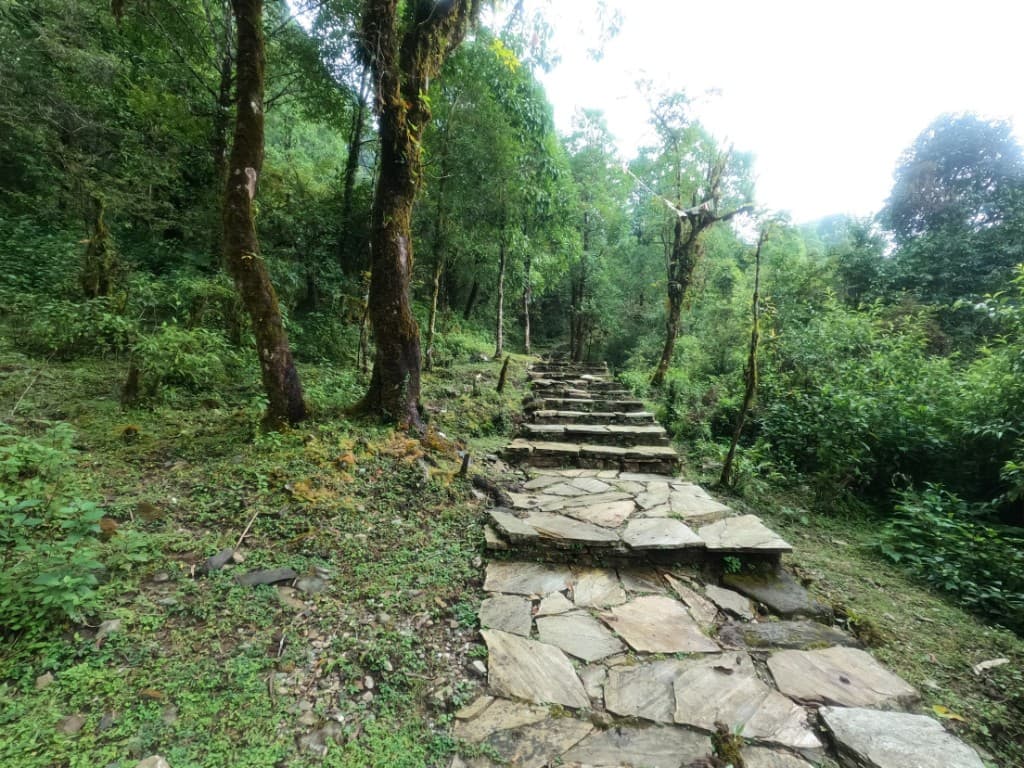
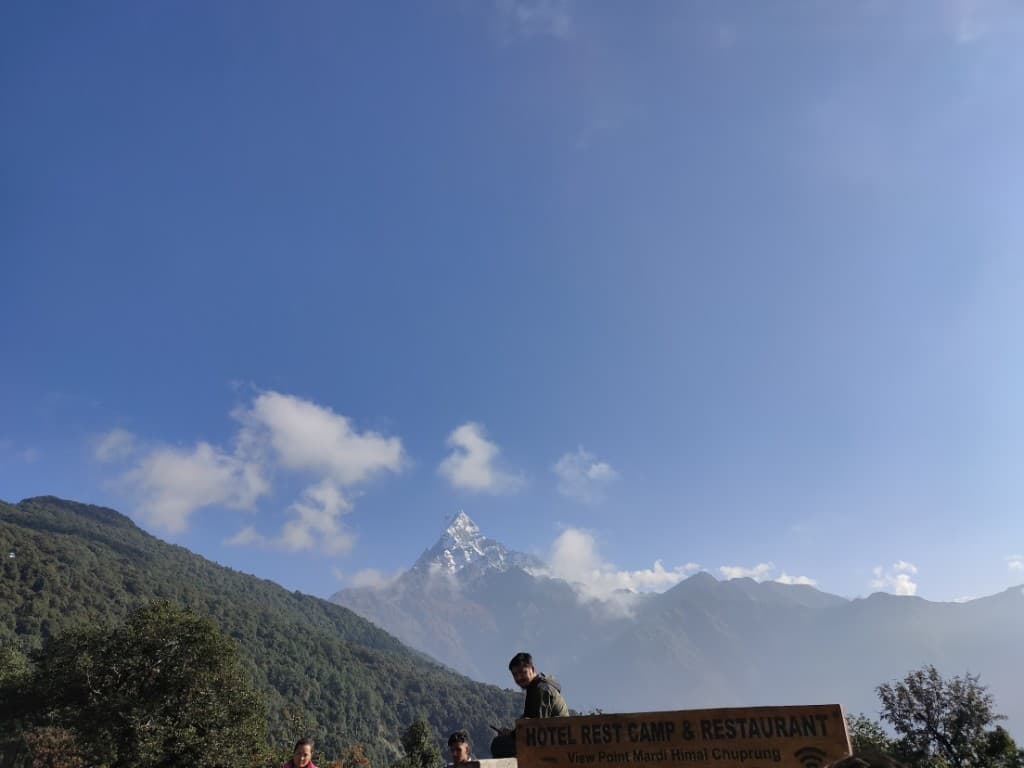
Trek uphill through oak and rhododendron forest to Forest Camp (also called Rest Camp or Koku; ~2,600 m). The trail is quieter than the main ABC route — you share the path with villagers and occasional mule trains rather than large trekking groups.
Walking time: 4–5 hours
Overnight: Forest Camp teahouse
Day 2: Trek to High Camp
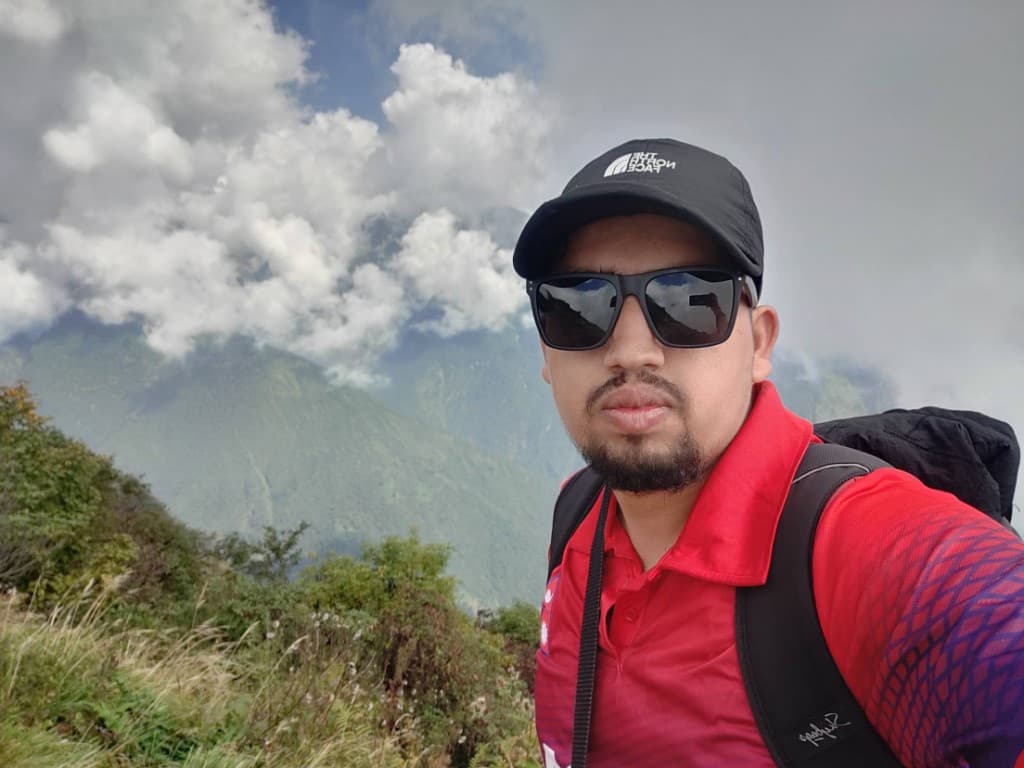
Continue through dense forest, emerging above the tree line as views open up. Pass Low Camp (~3,150 m) with improving sightlines toward Machhapuchhre and Mardi Himal.
Climb to High Camp (~3,580 m), where lodges sit on a ridge with sweeping mountain panoramas. On clear evenings, the peaks glow at sunset.
Walking time: 5–6 hours
Overnight: High Camp teahouse
Day 3: Hike to Mardi Himal Base Camp — Return to High Camp
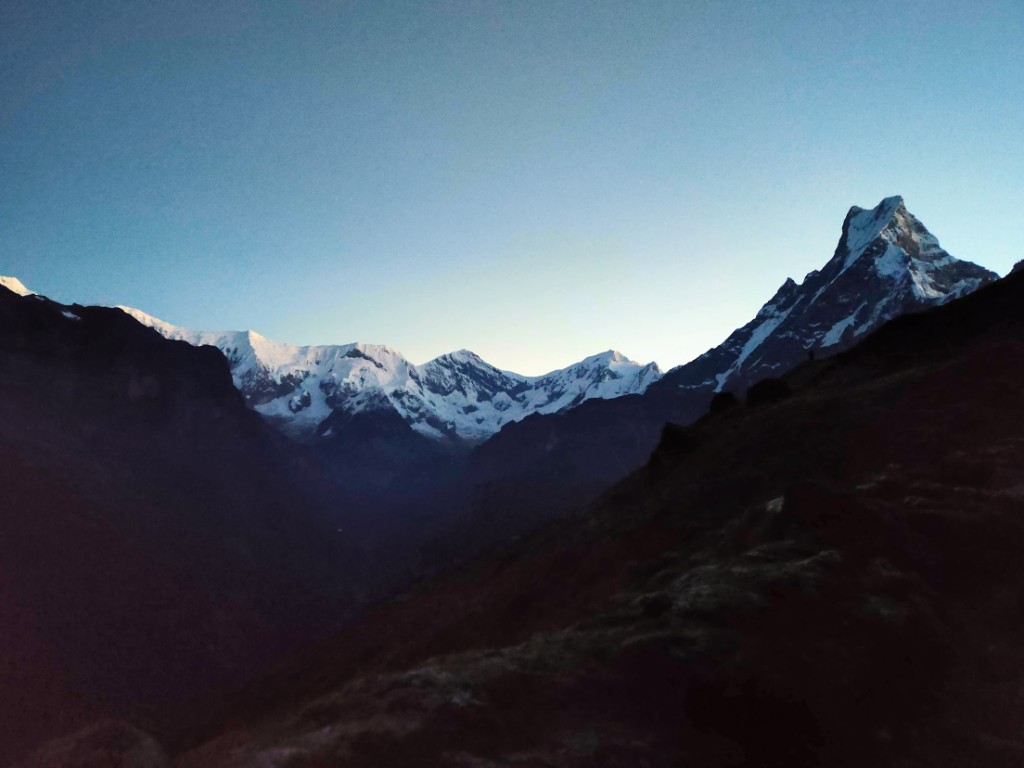
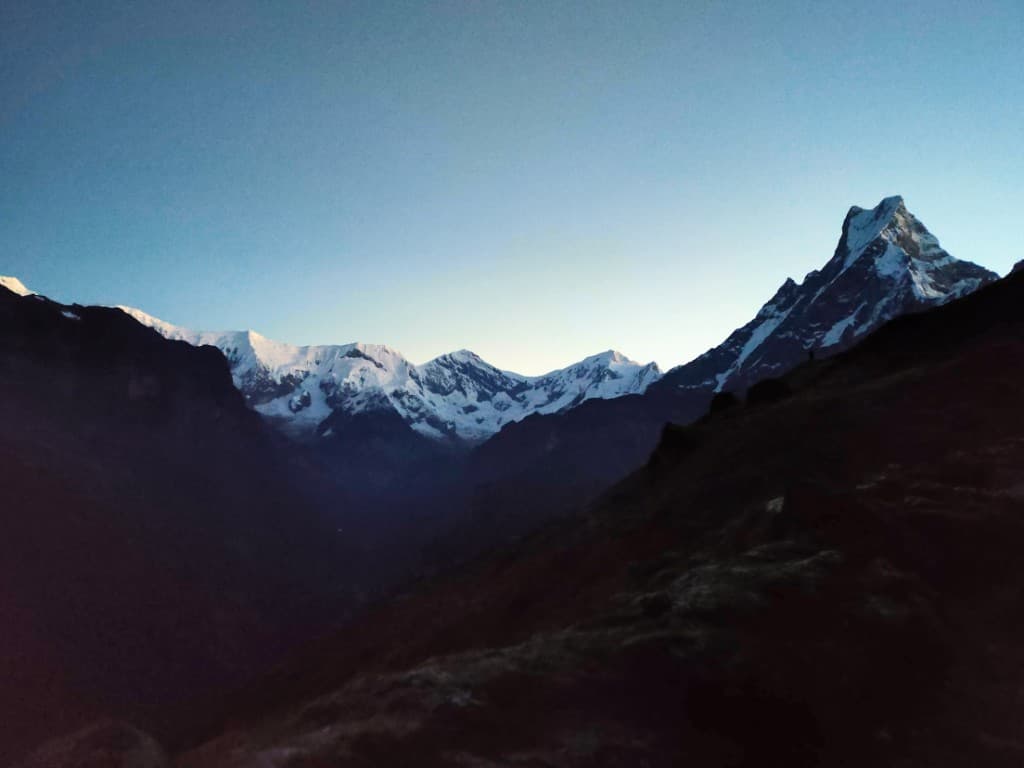
Start before dawn for the highlight of the trek: the push to Mardi Himal Base Camp (~4,500 m). The final section follows a ridgeline with Annapurna South, Hiunchuli, and Fishtail rising directly ahead — one of the most dramatic close-up mountain views in the Annapurna foothills.
Reach base camp for sunrise, take in the 360° panorama, then descend back to High Camp for the night. This out-and-back day avoids sleeping at extreme altitude while still delivering the summit experience.
Walking time: 6–8 hours (round trip from High Camp)
Overnight: High Camp teahouse
Mardi Himal High Camp: What to Expect
Mardi Himal High Camp (~3,580 m) is the strategic hub of the trek — and one of the most searched stops on this route. Lodges sit on an open ridge above the tree line, with sweeping views toward Machhapuchhre, Annapurna South, and Hiunchuli when the clouds lift.
Why High Camp matters:
- Sleeping altitude — overnighting here (instead of base camp) is the safer acclimatisation pattern used by most operators
- Sunrise staging — Day 3 starts before dawn from High Camp for the push to Mardi Himal Base Camp (~4,500 m)
- Teahouse comfort — rooms, dal bhat, and tea are available; expect colder nights and slightly higher prices than Forest Camp
- Weather watch — the ridge can be windy and cloudy; start early and turn back if conditions deteriorate above High Camp
If your search was specifically for Mardi Himal High Camp, plan two nights here on the classic 5-day itinerary (arrival on Day 2, return from base camp on Day 3).
Day 4: Trek to Siding Village
Descend through forest and alpine slopes to Siding Village, a peaceful Gurung settlement in the valley below. The long downhill is easier on the lungs than the ascent and passes through changing vegetation zones.
Walking time: 5–6 hours
Overnight: Siding teahouse or homestay
Day 5: Trek to Lumre — Drive to Pokhara
Follow the valley trail to Lumre, where a vehicle meets you for the drive back to Pokhara (about 2–3 hours). Celebrate with lakeside food and a well-earned rest.
Walking time: 2–3 hours
Drive: Lumre to Pokhara, 2–3 hours
Mardi Himal vs Other Short Treks
| Trek | Duration | Max altitude | Best for |
|---|---|---|---|
| Mardi Himal | 4–5 days | 4,500 m | Ridgeline views, quieter trail, short schedule |
| Poon Hill | 4–5 days | 3,210 m | Easiest intro trek, famous sunrise |
| Annapurna Base Camp | 7–12 days | 4,130 m | Sanctuary amphitheatre, longer classic |
| North ABC / Pancha Kunda | 3–5+ days | ~4,190 m | Wilder north face approach |
| Kapuche Glacier Lake | 3–4 days | ~2,450 m | Short glacial lake near Sikles |
Mardi Himal sits in a sweet spot: higher and wilder than Poon Hill, but shorter and less crowded than the main ABC trail.
Mardi Himal Trek Cost
Costs depend on group size, season, and whether you hire a guide and porter.
| Item | Typical cost (USD / NPR) |
|---|---|
| Guided trek package (5 days) | $250–450+ per person |
| ACAP permit | ~NPR 3,000 (foreigners) |
| TIMS card | ~NPR 1,000–2,000 |
| Teahouse room | NPR 500–1,500/night |
| Meals on trail | NPR 800–2,500/meal |
| Porter | NPR 2,000–2,500/day |
| Guide | NPR 2,500–3,500/day |
Budget tip: Carry enough NPR cash — ATMs are scarce once you leave Pokhara. Costs increase slightly at High Camp and above.
Message HolidayKosh on WhatsApp for current Mardi Himal trek packages and seasonal rates.
Permits for the Mardi Himal Trek
The route lies inside the Annapurna Conservation Area, so the same permits apply as for ABC:
- Annapurna Conservation Area Permit (ACAP) — issued in Pokhara or Kathmandu
- TIMS (Trekkers' Information Management System) card — trekker registration
Your guide or trekking agency typically arranges both. If self-organising, allow a half-day in Pokhara for processing.
Best Time for the Mardi Himal Trek
| Season | Months | Conditions |
|---|---|---|
| Autumn (peak) | Oct–Nov | Clearest skies, stable weather, best mountain views |
| Spring | Mar–May | Rhododendron blooms, warm days, good visibility |
| Winter | Dec–Feb | Cold at High Camp, possible snow on the ridge, fewer trekkers |
| Monsoon | Jun–Sep | Heavy rain, cloud, leeches — not recommended |
October–November and March–May are the ideal windows for sunrise at Mardi Himal Base Camp.
What to Pack for Mardi Himal
Essentials
- Broken-in trekking boots with good ankle support
- Layered clothing (base layer, fleece, down jacket)
- Waterproof jacket and pack cover
- Warm hat and gloves for base camp morning
- Trekking poles (steep sections and descent)
- Headlamp for the Day 3 pre-dawn start
- Sunscreen, sunglasses, lip balm
- Water purification tablets or filter
- Basic first aid kit
Documents & money
- Valid passport or Indian travel document for Nepal entry
- Travel insurance with helicopter evacuation cover
- NPR cash for teahouses and tips
- Permit cards (keep accessible)
Altitude & Safety
Mardi Himal Base Camp at 4,500 m is high enough for altitude sickness. Reduce risk by:
- Sleeping at High Camp (3,580 m) rather than base camp
- Ascending gradually on Days 1 and 2
- Staying hydrated and avoiding alcohol at altitude
- Knowing AMS symptoms (headache, nausea, dizziness)
- Descending immediately if symptoms worsen
A licensed guide is strongly recommended — the ridgeline above High Camp can be narrow and weather changes quickly. The trail is less commercialised than ABC, which is part of its charm but also means fewer fellow trekkers if you need help.
Frequently Asked Questions
How long is the Mardi Himal Base Camp trek?
Most itineraries take 4 nights and 5 days on the trail, plus travel to and from Pokhara. Allow 7–8 days total from India including flights or overland entry.
Is the Mardi Himal trek difficult?
It is rated moderate. You need good cardiovascular fitness for multi-hour uphill days and a pre-dawn start on Day 3. No technical climbing skills are required.
Can beginners do the Mardi Himal trek?
Yes, with preparation. The teahouse route and moderate distance make it accessible to first-time trekkers who train with long walks beforehand and hire a guide.
Do I need a guide for Mardi Himal?
Not legally required for solo trekkers with permits, but a guide and/or porter is strongly recommended — especially for navigation on the ridgeline and for safety in changing weather.
How do I get from India to the Mardi Himal trek?
Fly or travel overland to Kathmandu, then reach Pokhara by flight (~25 min) or road (~6–7 hrs). Day 1 starts with a short drive from Pokhara to Dhampus or Kande.
What is Mardi Himal High Camp altitude?
Mardi Himal High Camp sits around 3,580 m. Most trekkers sleep here before and after the early-morning hike to base camp at ~4,500 m.
Is Mardi Himal less crowded than Annapurna Base Camp?
Generally yes. Mardi Himal is a newer, quieter route compared to the busy ABC and Poon Hill trails — ideal if you want Himalayan solitude without going fully remote.
Final Thoughts
The Mardi Himal Base Camp trek is the hidden gem of the Annapurna region: a short, scenic, teahouse-supported adventure that delivers sunrise at 4,500 metres and close-up views of Machhapuchhre and Annapurna South. For Indian travelers balancing work leave and wanderlust, it is one of the most efficient ways to stand face-to-face with the Himalayas.
Pack warm layers for the base camp morning, book permits through a reliable agency, and give yourself a recovery day in Pokhara when you descend. The ridgeline at Mardi Himal is worth every step.
Plan Your Mardi Himal Trek
- Explore Pokhara destination guide
- Annapurna Base Camp Trek guide — longer classic in the same region
- North ABC Trek to Pancha Kunda
- Kapuche Glacier Lake Trek
- Adventures in Nepal — full guide
- Paragliding in Pokhara — post-trek reward
- Bungee jumping in Pokhara
- Sarangkot sunrise — acclimatisation before the trek