- Published on
Stand-Up Paddleboarding on Phewa Lake, Pokhara: Complete Guide (Cost, Rentals & Tips)
- Authors

- Name
- Pratap Sharma
- @pratap2210
- Website
- https://pratapsharma.io
Stand-up paddleboarding (SUP) on Phewa Lake is one of the most underrated things to do in Pokhara. After days of trekking, paragliding, or driving in from India, an hour on the water feels like the perfect reset — calm lake, misty Annapurna foothills in every direction, and the freedom to go at your own pace.
Nepal sits at the foot of the Himalayas with serene lakes, gentle rivers, and landscapes that make every paddle memorable. Phewa Lake (also spelled Fewa Lake) is the easiest and most popular place to try SUP for the first time. Operators like Paddle Nepal rent boards right from Lakeside, and you can be on the water within minutes of walking down from your hotel.
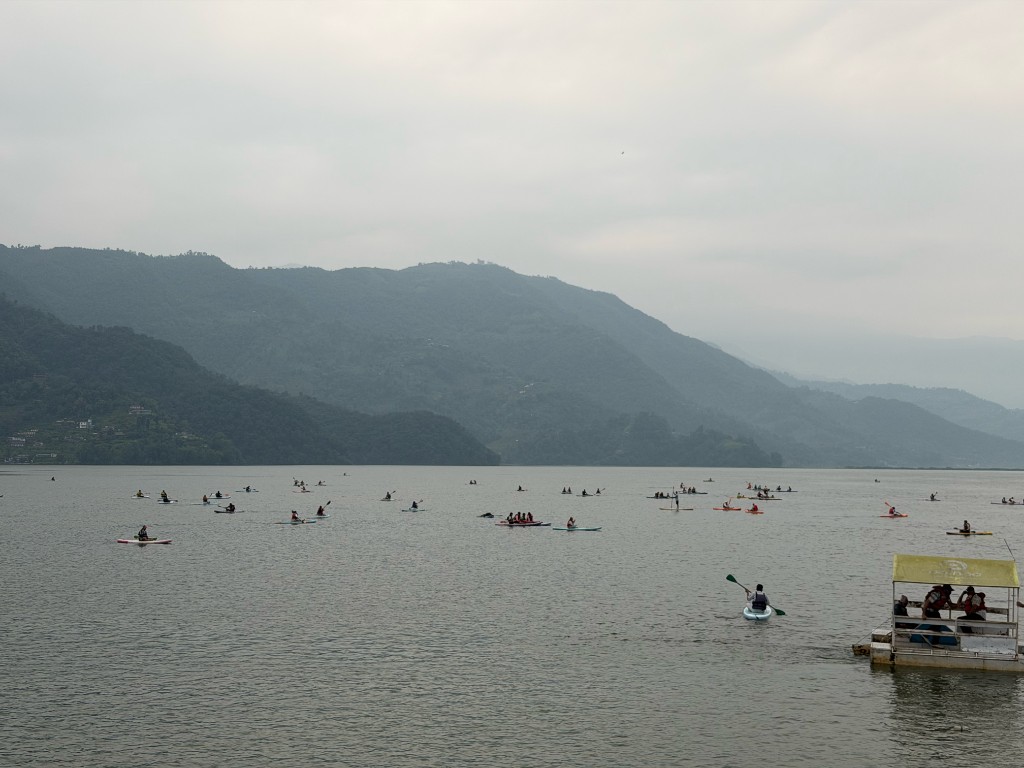
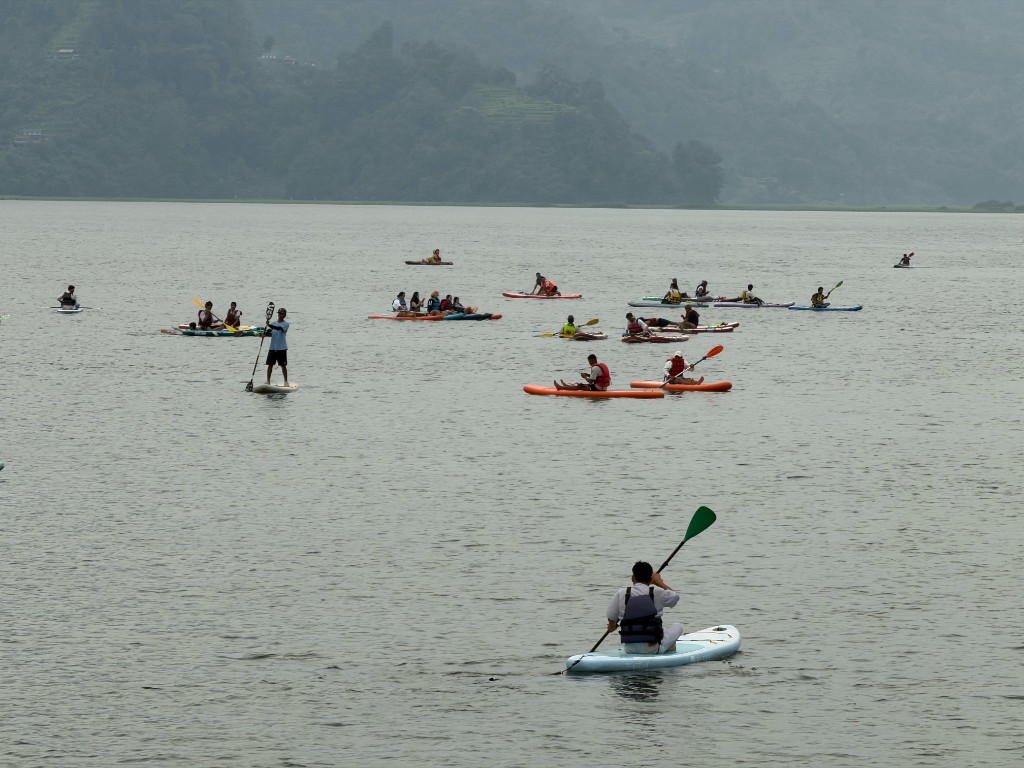
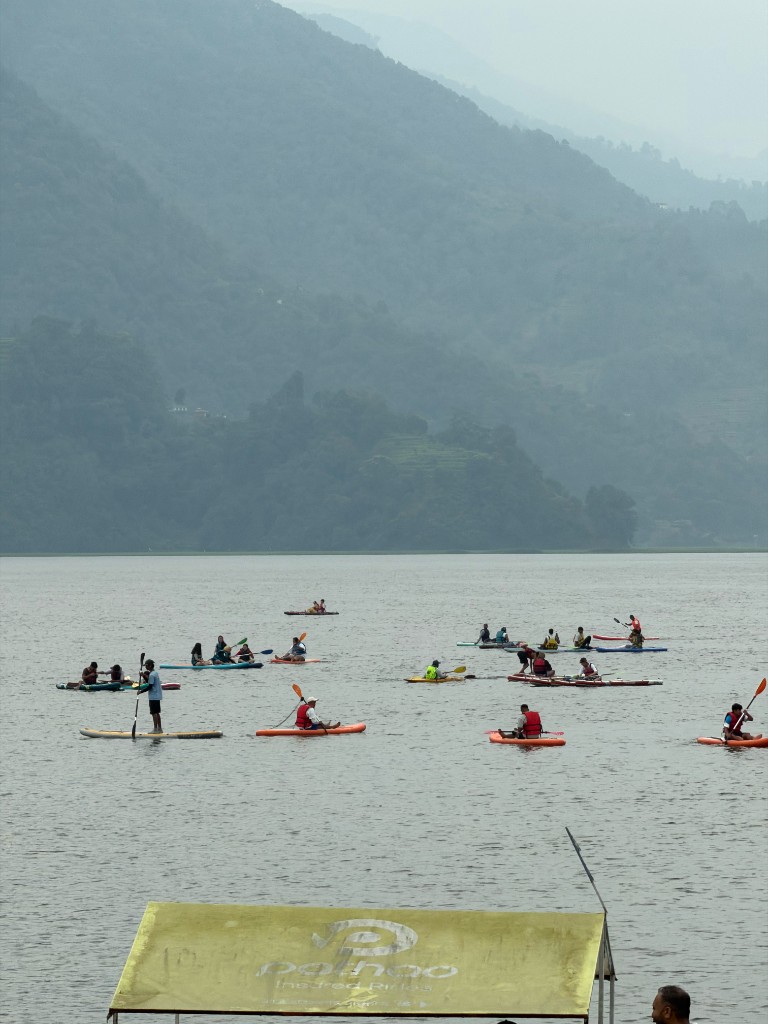
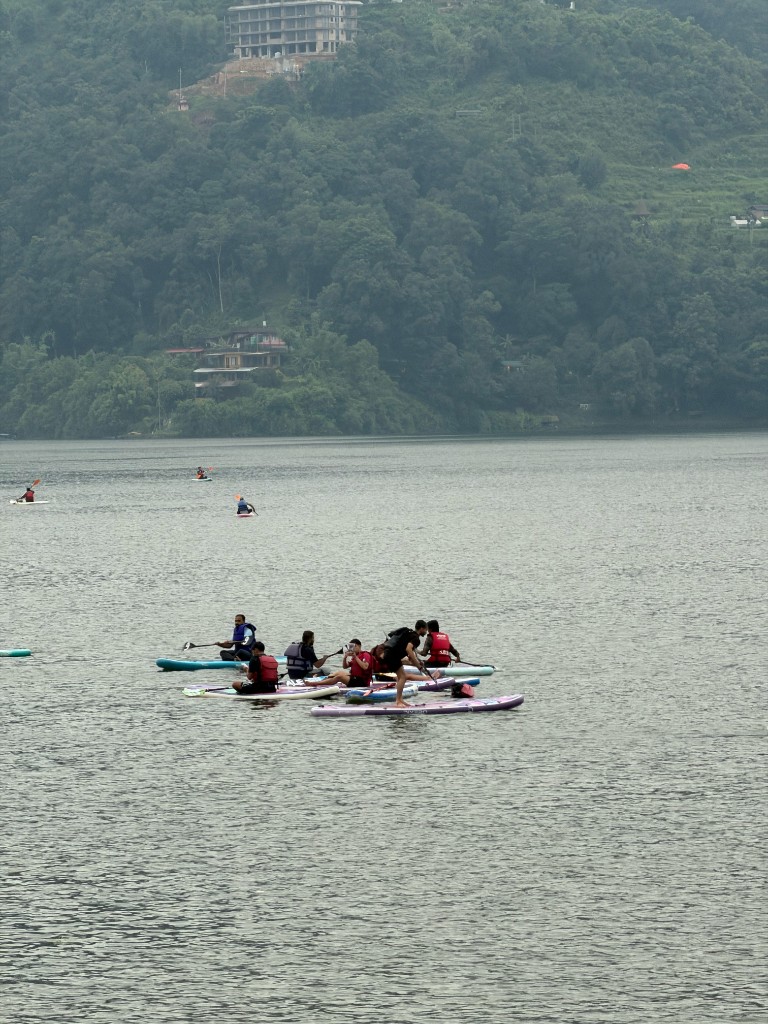
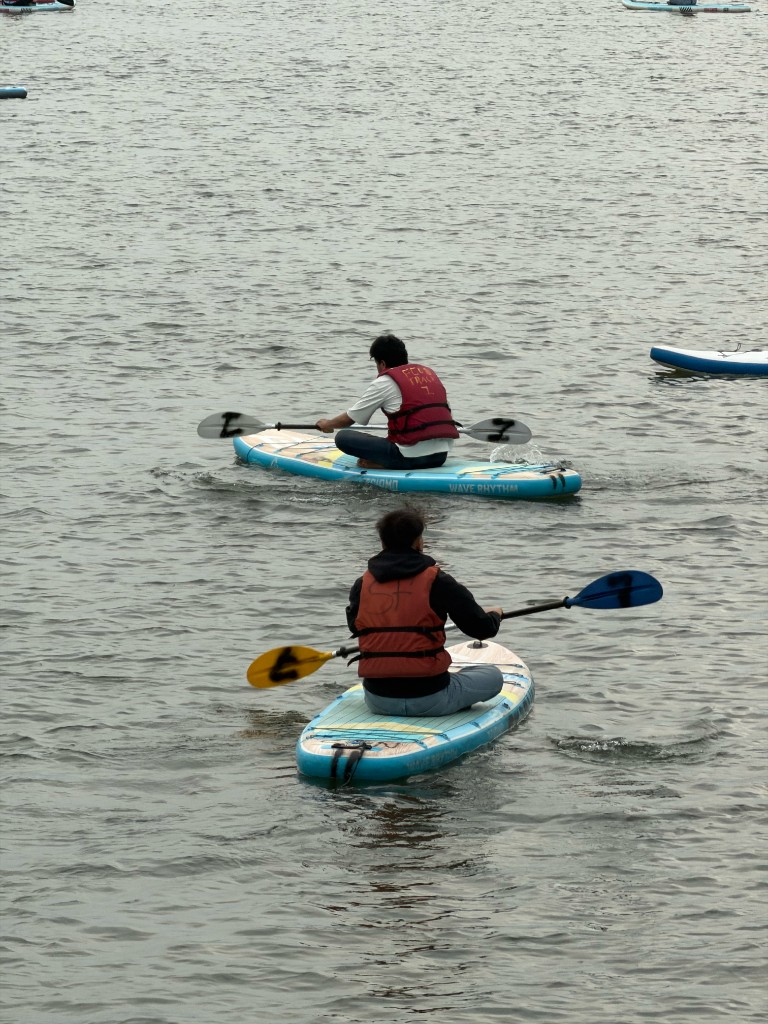
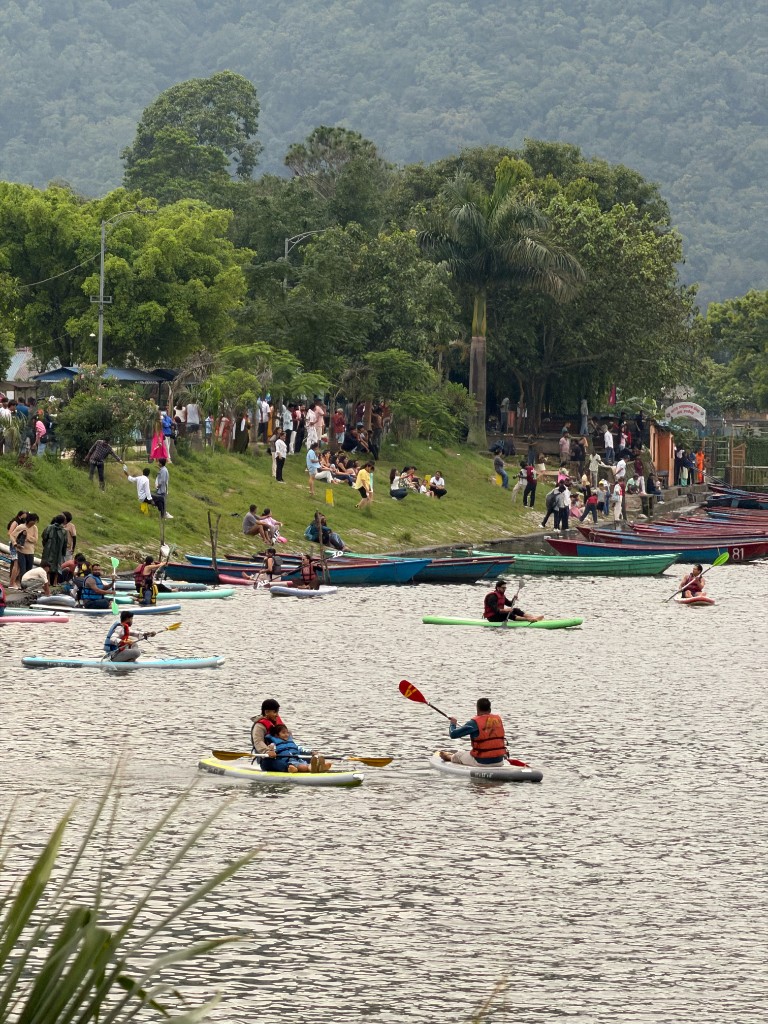
This guide covers SUP rental costs, what is included, what to bring, safety basics, and what a session on Phewa Lake actually feels like — with photos from a morning paddle on the lake.
Gallery
SUP on Phewa Lake at a Glance
| Detail | Info |
|---|---|
| Location | Lakeside, Phewa Lake, Pokhara |
| Operator | Paddle Nepal (and other Lakeside rentals) |
| Duration options | 1 hour, half day (3–4 hrs), full day (7am–5pm) |
| SUP rental | NPR 600 / 1,800 / 3,000 |
| Kayak rental | NPR 500 / 1,500 / 2,500 |
| Guide hire | NPR 500 per hour (optional) |
| Included | Board, paddle, lifejacket |
| Difficulty | Easy — suitable for beginners and families |
| Best season | October–November and March–May |
| Departure | Daily — walk-in rentals available |
For broader Pokhara planning, see our SUP activity page, Nepal trip from India guide, and Adventures in Nepal overview.
Why Try SUP on Phewa Lake?
Pokhara is famous for paragliding and trekking, but the lake deserves equal billing. Stand-up paddleboarding here hits a sweet spot that explains why it is one of the fastest-growing water sports on the planet:
- Beginner-friendly — flat, sheltered water with no rapids or currents
- Himalayan scenery — Machhapuchhre and the Annapurna foothills frame the lake on clear days
- Flexible timing — rent for an hour between sightseeing stops or spend a full morning on the water
- Family-friendly — kids and non-swimmers can sit or kneel on the board with a lifejacket
- Affordable — from NPR 600 for an hour, it is one of the cheapest adventures in Pokhara
- Low commitment — no trekking permits, no early-morning jeep rides, no booking weeks ahead
Unlike white-water rafting or a multi-day trek, you can walk to the lake from Lakeside, rent a board, and be paddling within 15 minutes.
How Much Does SUP Cost in Pokhara?
Paddle Nepal publishes clear lake-rental rates at their Phewa Lake base. Prices below are per person and include a paddle and lifejacket.
SUP (Stand-Up Paddleboard)
| Duration | Price (NPR) | Approx. INR |
|---|---|---|
| 1 hour | 600 | ~₹375 |
| Half day (3–4 hours) | 1,800 | ~₹1,125 |
| Full day (7am–5pm) | 3,000 | ~₹1,875 |
Kayak (alternative)
| Duration | Price (NPR) | Approx. INR |
|---|---|---|
| 1 hour | 500 | ~₹310 |
| Half day (3–4 hours) | 1,500 | ~₹940 |
| Full day (7am–5pm) | 2,500 | ~₹1,560 |
Optional guide / instructor
- NPR 500 per hour — useful if you want a proper lesson or prefer paddling with a local who knows the lake
Private instruction is also available if you want one-on-one coaching before venturing further from shore.
What is included: SUP or kayak rental, paddle, and lifejacket.
What is not included: Transportation, accommodation, travel insurance, tips, swimwear, towels, and personal items.
Always confirm the latest rates directly with the operator before you go — prices can shift slightly by season.
Where to Rent SUP Boards on Phewa Lake
The main rental area is along Lakeside — the tourist strip on the eastern shore of Phewa Lake. Paddle Nepal operates from this area and is one of the established adventure companies in Pokhara (they also run rafting and kayaking trips on Nepal's rivers).
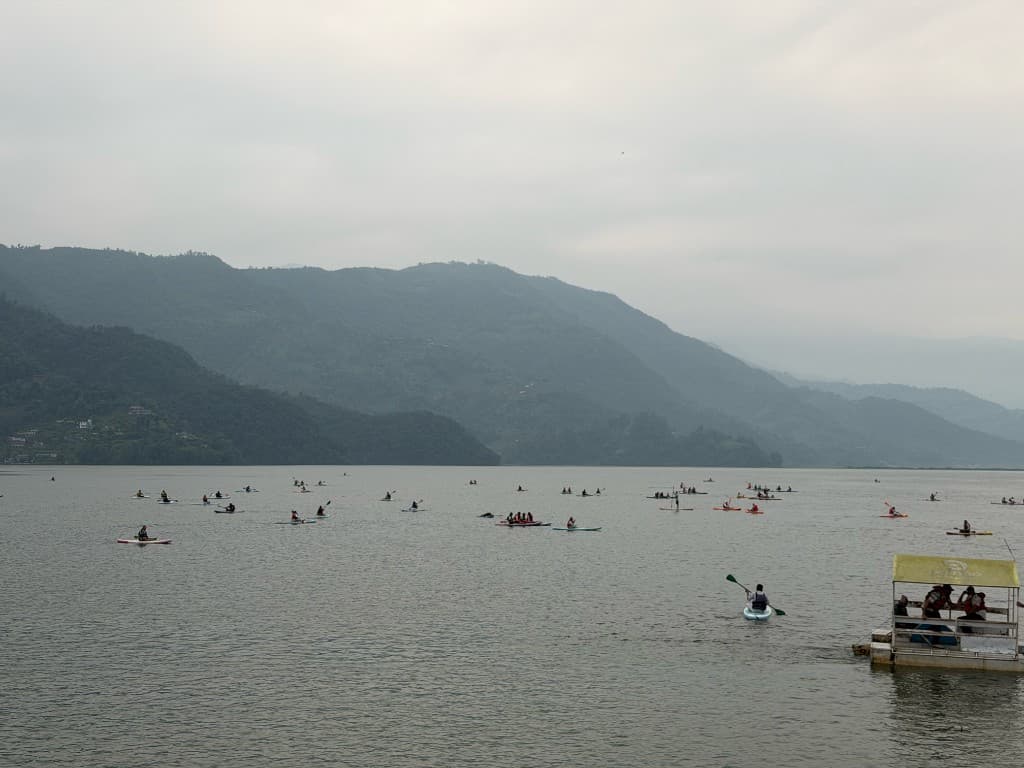
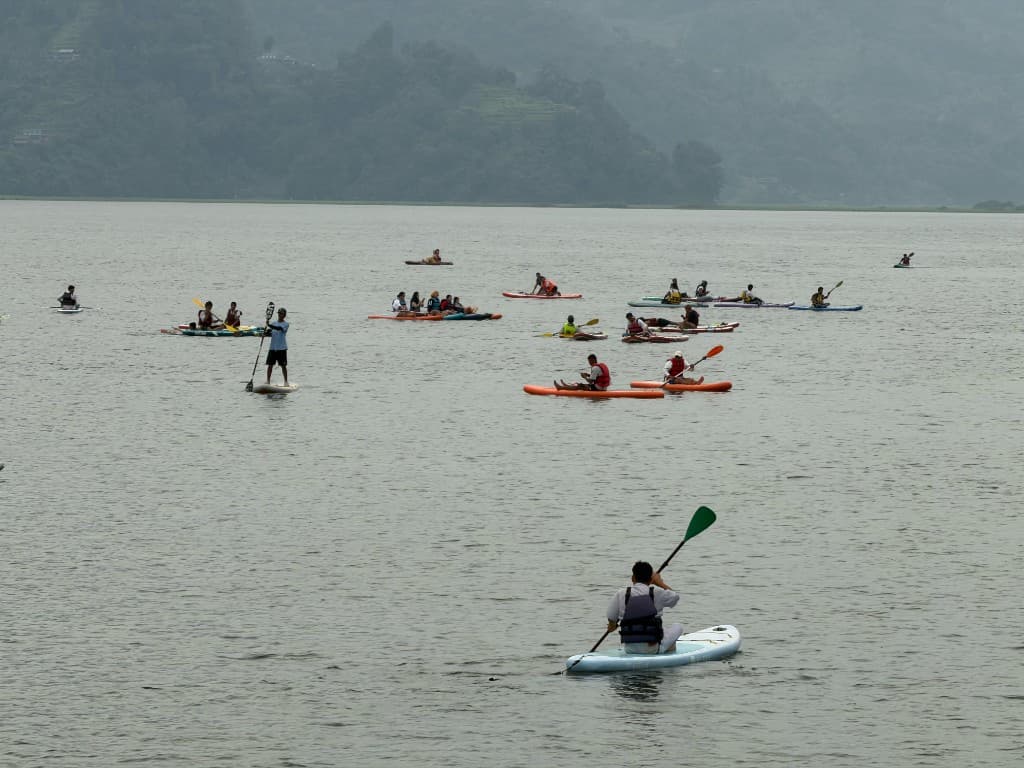
Look for the board racks and lifejacket stations near the water's edge. On busy mornings you will see dozens of colourful SUPs and kayaks already out on the lake — a good sign that conditions are calm and the setup is straightforward.
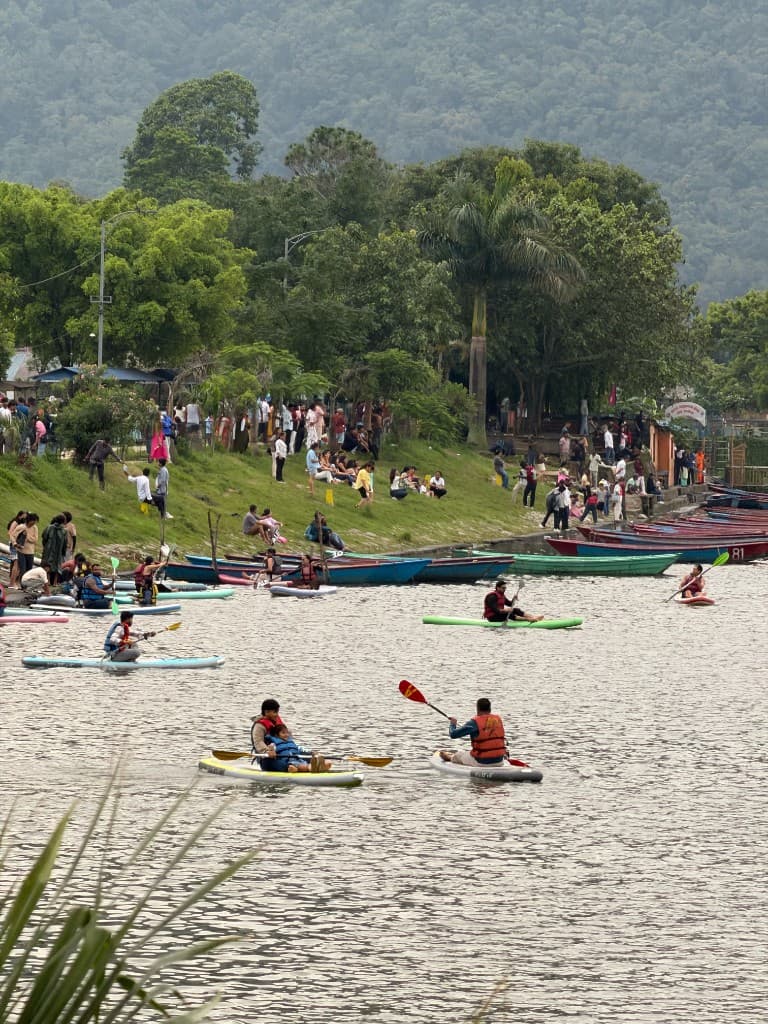
The shore itself is lively: wooden rowboats lined up along the bank, families on the grass, and paddlers of every skill level spread across the water. It feels less like a formal tour and more like a shared playground.
What to Expect on the Water
First-timers: sit, kneel, then stand
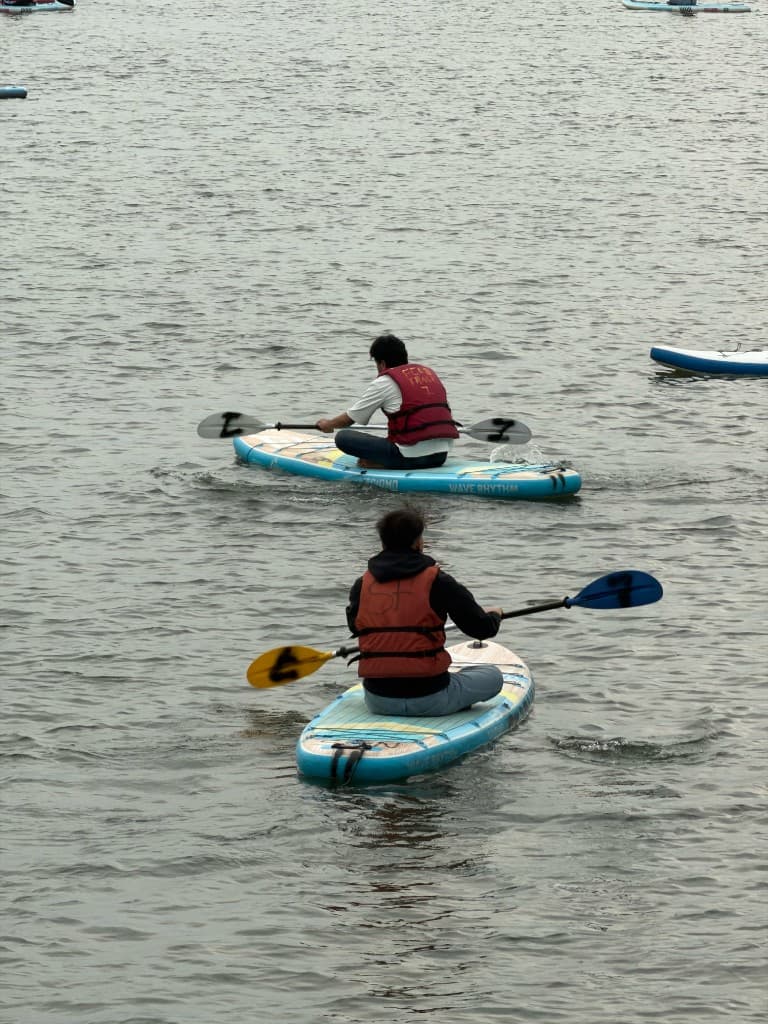
You do not need prior experience. Most people start by sitting or kneeling on the board and paddling with a double-bladed paddle — exactly what you will see across the lake on any given morning. Once you feel stable, try standing up in the centre of the board with your feet shoulder-width apart.
The water close to Lakeside is sheltered and relatively shallow near the shore, so falling off is more funny than dangerous — especially with a lifejacket on.
Group sessions
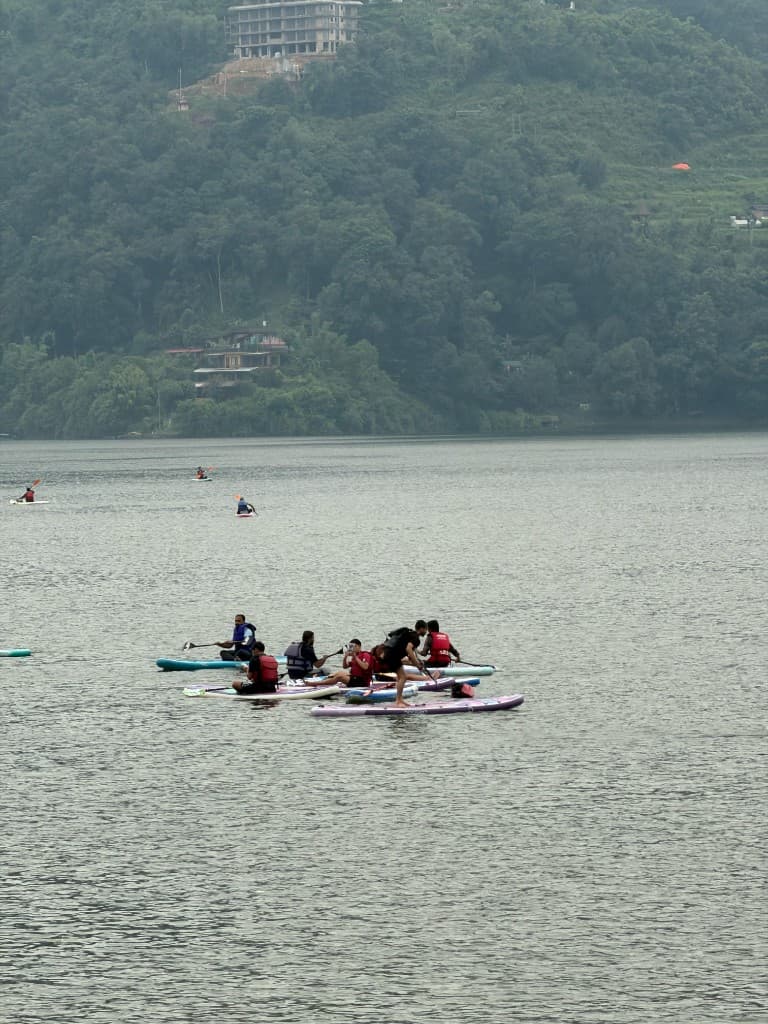
SUP on Phewa Lake is naturally social. It is common to see groups of friends, couples, and families paddling together in loose clusters. You set your own pace — paddle toward the centre of the lake for wide mountain views, or stay near shore if you prefer staying close to land.
Views from the lake
On a clear morning, the Annapurna range and Machhapuchhre (Fishtail Mountain) rise above the green hills on the far shore. On misty or overcast days — which are common in Pokhara — the hills fade into soft grey layers and the lake takes on a moody, atmospheric quality. Both are worth experiencing.
From the water you also get a perspective you miss from the shore: the World Peace Pagoda perched on the hilltop, rowing boats crossing between shores, and paragliders descending from Sarangkot in the distance.
Best Time for SUP on Phewa Lake
| Season | Conditions | Verdict |
|---|---|---|
| Autumn (Oct–Nov) | Clear skies, calm mornings, best mountain views | Best |
| Spring (Mar–May) | Warm, pleasant, good visibility | Excellent |
| Winter (Dec–Feb) | Cool but calm; fewer crowds | Good |
| Monsoon (Jun–Sep) | Rain, clouds, choppier water | Possible but less ideal |
Morning sessions are ideal — winds tend to be lighter, the lake is calmer, and mountain views are sharper before afternoon haze builds. Paddle Nepal's full-day rental runs from 7am to 5pm, so an early start gives you the best conditions and the most time.
What to Bring
Pack light — the operator provides the board, paddle, and lifejacket. Bring:
- Swimwear or quick-dry clothing you do not mind getting wet
- Towel and change of clothes for after your session
- Sunscreen — water reflection intensifies UV even on cloudy days
- Water bottle — paddling is more of a workout than it looks
- Waterproof phone pouch if you want on-water photos (or use a shore-based camera)
- A little cash for tips, snacks, or extra rental time
Avoid loose jewellery, wallets in shallow pockets, and flip-flops that can slip off on a wet board.
Safety Tips
Paddle Nepal emphasises safety across their adventure programmes. For a casual lake rental, keep these basics in mind:
- Wear the lifejacket — provided with every rental; keep it fastened
- Stay within your comfort zone — beginners should stay closer to shore
- Watch for boats — rowing boats and motorboats share the lake; give them space
- Check the weather — if winds pick up or rain starts, head back to shore
- Hire a guide if you are nervous — NPR 500/hour for instruction is good value
- Carry travel insurance — operators insure their crew, but participants need their own emergency medical cover
SUP on a calm lake is one of the lowest-risk adventure activities in Nepal, but respect the water and your own limits.
SUP vs Kayak vs Boating on Phewa Lake
Not sure which water activity to pick? Here is a quick comparison:
| Activity | Best for | Effort | Price from |
|---|---|---|---|
| SUP | Solo travellers, fitness, photos | Moderate | NPR 600/hr |
| Kayak | Pairs, relaxed paddling | Light–moderate | NPR 500/hr |
| Phewa Lake boating | Sightseeing, temple visit | Minimal | Varies |
Many visitors do boating to Tal Barahi Temple one afternoon and SUP the next morning — they complement each other well.
Beyond Phewa Lake: SUP in Nepal
Paddle Nepal also runs SUP experiences on rivers and at other destinations across Nepal — from half-day sessions to multi-day SUP camping trips connecting Kathmandu, Pokhara, Bandipur, Chitwan, and Bardia. Phewa Lake is the easiest entry point, but if you catch the SUP bug, Nepal's river network opens up longer adventures.
For river-based thrills near Pokhara, see white-water rafting on the Seti Gandaki and Trishuli.
How to Fit SUP into Your Pokhara Itinerary
A typical half-day looks like this:
| Time | Activity |
|---|---|
| 7:00–7:30am | Walk to Lakeside rental point |
| 7:30–8:00am | Pick up board, lifejacket, quick briefing |
| 8:00–10:00am | Paddle on the lake (2-hour half-day session) |
| 10:00–10:30am | Return board, change clothes |
| 11:00am onwards | Sarangkot sunrise (if you have not done it), lunch at Lakeside, or paragliding in the afternoon |
For a 3-day Pokhara plan from India, slot SUP on Day 2 morning between paragliding and a lakeside evening — see our full Nepal trip from India itinerary.
Who Is SUP on Phewa Lake For?
Stand-up paddleboarding works well for:
- First-time visitors to Nepal who want a gentle adventure between bigger activities
- Families with children — kids can sit on the board while an adult paddles
- Couples looking for a peaceful, scenic experience together
- Solo travellers who want exercise with a view
- Trekkers on rest days — low impact recovery after Annapurna or Mardi Himal trails
- Indian travellers on a short Pokhara weekend — affordable, no permits, walk-in friendly
You do not need to be athletic. Sitting on the board and paddling at your own pace is perfectly normal and genuinely enjoyable.
Final Thoughts
Stand-up paddleboarding on Phewa Lake is the quiet adventure in Pokhara — no harness, no altitude, no bus transfers. Just you, a board, and one of Nepal's most beautiful lakes framed by Himalayan hills.
At NPR 600 for an hour, it is one of the best-value experiences in town. Whether you stand, kneel, or sit cross-legged and drift, the lake delivers a perspective on Pokhara that trekking and paragliding cannot replicate.