- Published on
Annapurna Base Camp Trek From Pokhara: Our 4-Day Story
- Authors

- Name
- Pratap Sharma
- @pratap2210
- Website
- https://pratapsharma.io
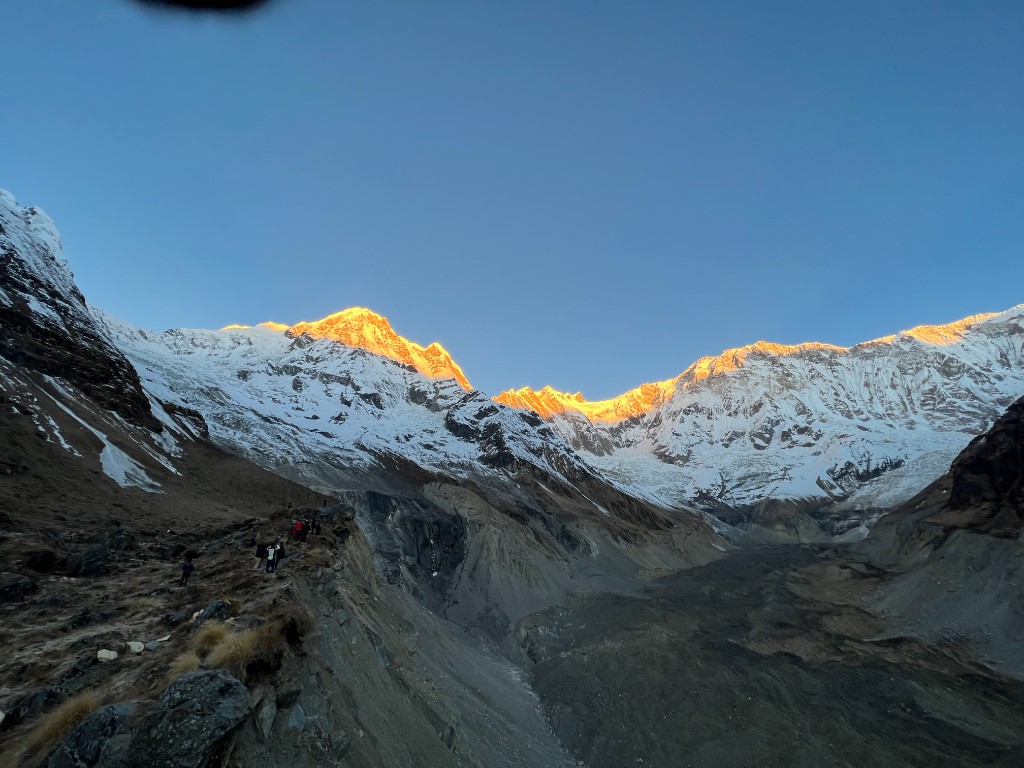
We were standing outside the teahouse in the dark, waiting for the sun. At Annapurna Base Camp the air is thin enough that you notice your own breathing. Then the first light caught the snow — a thin gold line along the highest ridges — and the whole amphitheatre started to wake up.
I remember looking at the peaks and thinking something simple, almost stubborn: how many people in the world get to see this with their own eyes?
We had given ourselves two walking days to get here.
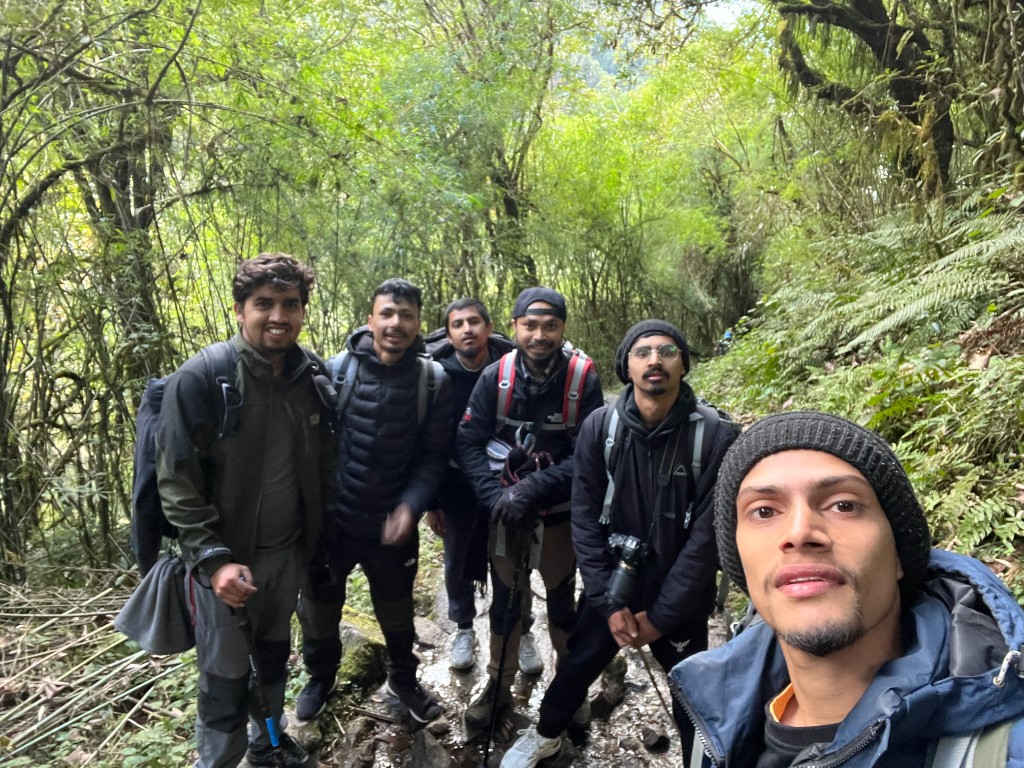
I am Pratap Sharma. That is the honest version of our Annapurna Base Camp trek. Not the classic week-long itinerary. Six of us live in Pokhara. We started from there on 22 October 2022. Dashain (Dussehra) was on the calendar, and we wanted to be home before Ashtami. So we squeezed in a sound healing session and a paragliding flight, ate a light breakfast in Lakeside, put the bikes on the road to Jhinu, and started walking.
This is that journey — day by day — plus what I would tell a friend who is planning the same ABC trek Nepal route from Pokhara. If you would rather watch first, the full film is here: Annapurna Base Camp trek vlog.
Gallery
Our ABC Trek at a Glance
| Detail | What we actually did |
|---|---|
| Who | Pratap Sharma and five friends from Pokhara |
| When | Started 22 October 2022 — Dashain season; we needed to be home before Ashtami |
| How we started | Motorbikes from Lakeside to Jhinu |
| Parking | NPR 150 per bike per night at Jhinu |
| Day 1 | Jhinu → Chhomrong → Lower/Upper Sinuwa → Bamboo |
| Day 2 | Bamboo → Dovan → Deurali → Machhapuchhre Base Camp → Annapurna Base Camp |
| Day 3 | Sunrise at ABC → descend, lunch in Dovan → night in Lower Sinuwa |
| Day 4 | Lower Sinuwa → Chhomrong → Jhinu Hot Spring → bikes → lunch in Nayapul → Pokhara |
| Nights on trail | Bamboo, ABC, Lower Sinuwa |
| Max altitude | 4,130 m at Annapurna Base Camp |
| Vlog | Watch the ABC trek on YouTube |
If you want the standard 7–12 day plan, permits, and cost tables, use our Annapurna Base Camp Trek guide. This page is the compressed, first-hand version.
Why We Decided to Do the Annapurna Base Camp Trek
We live under these mountains. That sounds romantic until you realise how easy it is to postpone the walk. Pokhara gives you lake days, paragliding, and a view of Machhapuchhre from town. The Annapurna Base Camp trail asks for something else: consecutive days of uphill, cold nights, and the patience to keep moving when your legs have already voted no.
Six of us wanted that. Not a guided brochure version. A buddy trip. We also had a calendar problem. Dashain was close, and returning before Ashtami mattered more than stretching the itinerary. That single constraint shaped everything — the bikes to Jhinu, the early starts, the decision to push all the way to base camp on day two.
I went in expecting tired legs and a good view. I did not fully expect how long the last stretch after Machhapuchhre Base Camp would feel, or how much a plate of dal bhat in Deurali would matter.
Preparing for the Trek — Sound Healing, Then the Sky
We did not go straight from home to the trail.
One of us spent two days at Yogaban Retreat for a sound healing session. After he came back, the six of us went paragliding. We flew for around 30 minutes over Pokhara with Sky Riders Paragliding Pokhara — a clean, loud, ridiculous contrast to the slow walking that was coming. If you are building a Pokhara trip around the trek, that flight is still one of the best hours you can buy. Details live in our paragliding in Pokhara guide and the tandem flight page.
Then we decided it was time to start the trek.
I will not pretend we had a scientific packing list or a training plan written down. We were locals with a short window, bikes, and a teahouse booked at base camp. The preparation that actually counted was simpler: start early, eat when you can, and accept that a four-day Annapurna Base Camp trek itinerary is a physical argument with the mountain.
Getting to the Starting Point: Lakeside to Jhinu by Bike
On 22 October 2022, after a light breakfast in Lakeside, we rode out of Pokhara toward Jhinu.
The road is one Pokhara people know in pieces even if they have never done the ABC trek: Sarangkot, Naudanda, Nayapul, Birethanti, then Jhinu. Taking bikes was not a style choice. It was the Dashain clock. A jeep to Nayapul is the usual start for many itineraries; riding to Jhinu cut the approach so we could be on the trail the same morning.
At Jhinu we parked the bikes. They charged us NPR 150 per bike per night. We left them, crossed the suspension bridge over the Modi River — the big river of this whole region — and the walk began.
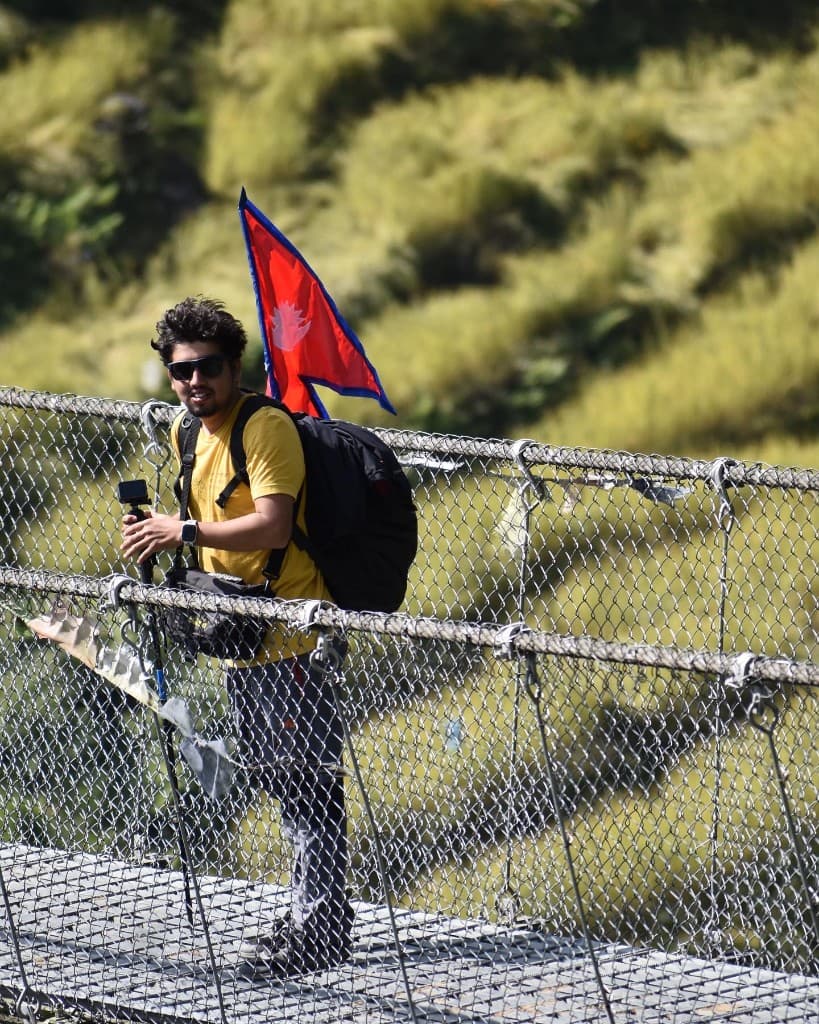
Day 1: Jhinu to Bamboo
The long pull to Chhomrong
The first hours are uphill. Not a dramatic alpine uphill. A sustained, village-to-village climb that makes you bargain with your pace. By the time we reached Chhomrong, lunch was not a nice extra. It was the point. After that kind of climb, food tastes better than it has any right to. We ate, sat with it for a while, then stood up again.
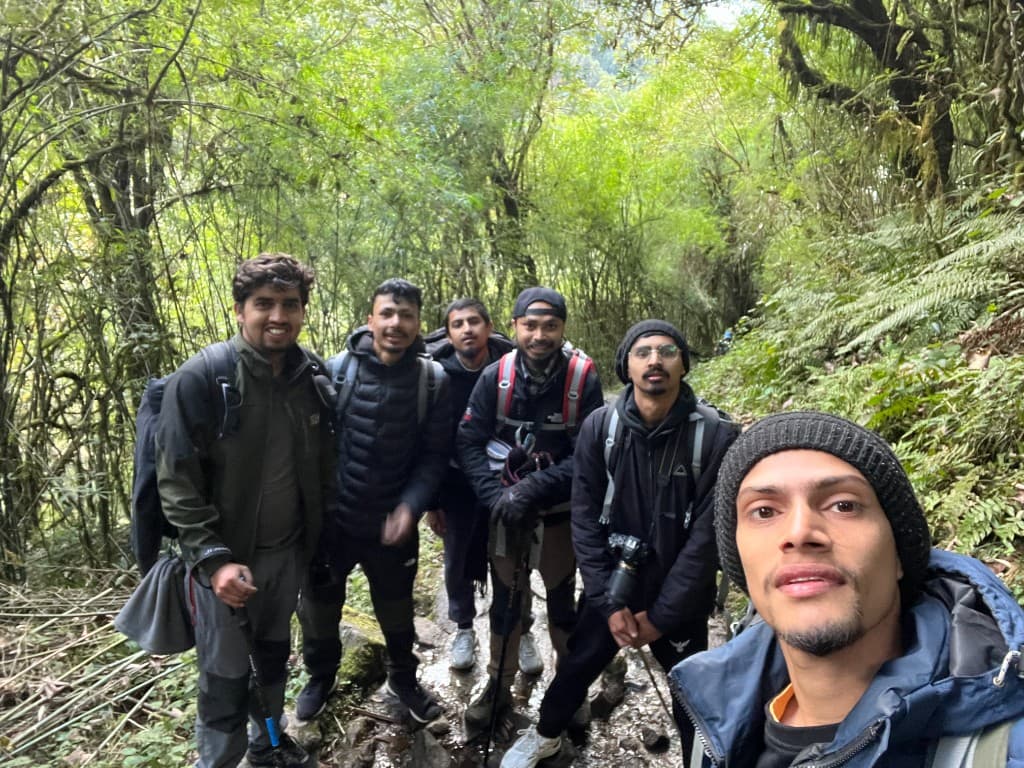
Down to Selbu Bridge, then Sinuwa
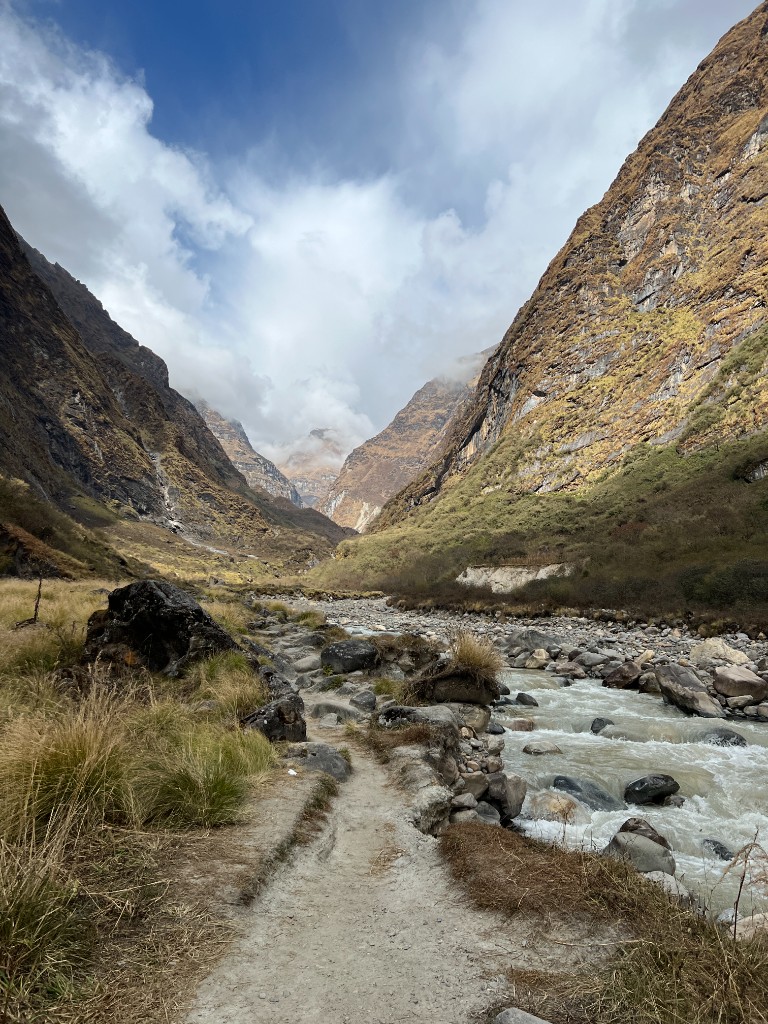
After Chhomrong the trail drops toward another suspension bridge — Selbu Bridge, which connects Chhomrong with Lower Sinuwa. Downhill sounds like a gift until you remember you will climb this same side on the way home. That thought can wait. On day one you are still collecting the route: Lower Sinuwa, Upper Sinuwa, the forest closing in, bamboo appearing the way the village name promises.
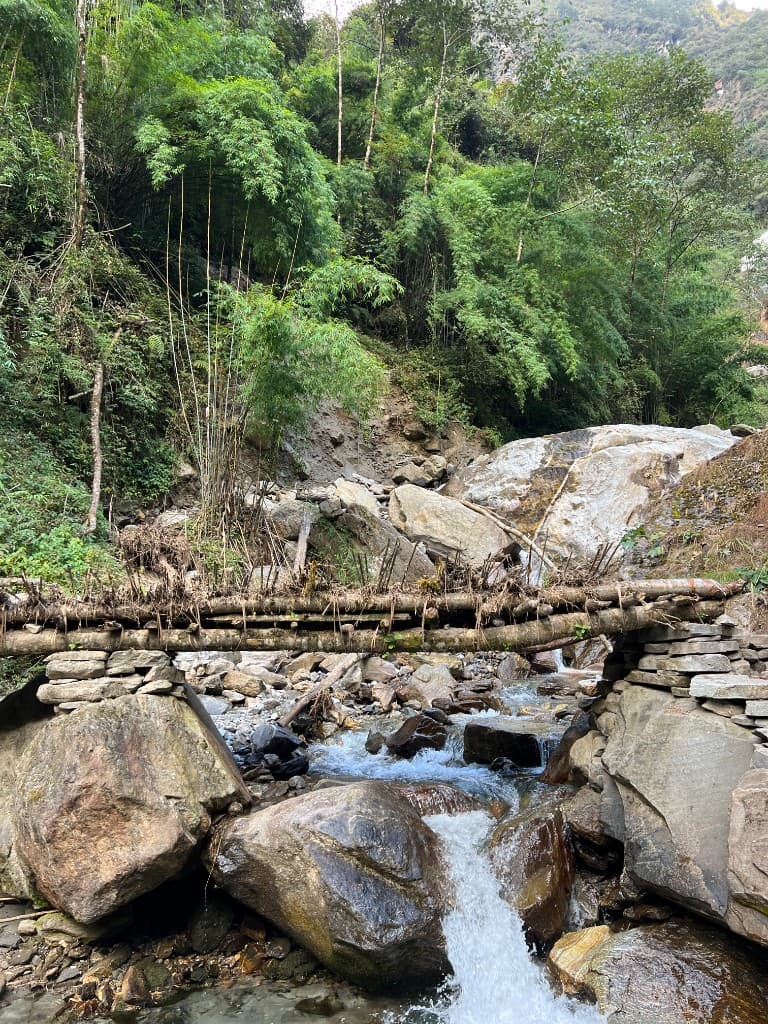
There are smaller crossings too — rough log bridges over clear streams, stacked stones, moss, the kind of trail that feels handmade. We were all tired by the time we reached Bamboo. That was enough. We had dinner early and went to bed early. The plan for day two was already sitting on the table: start before the day got away from us.
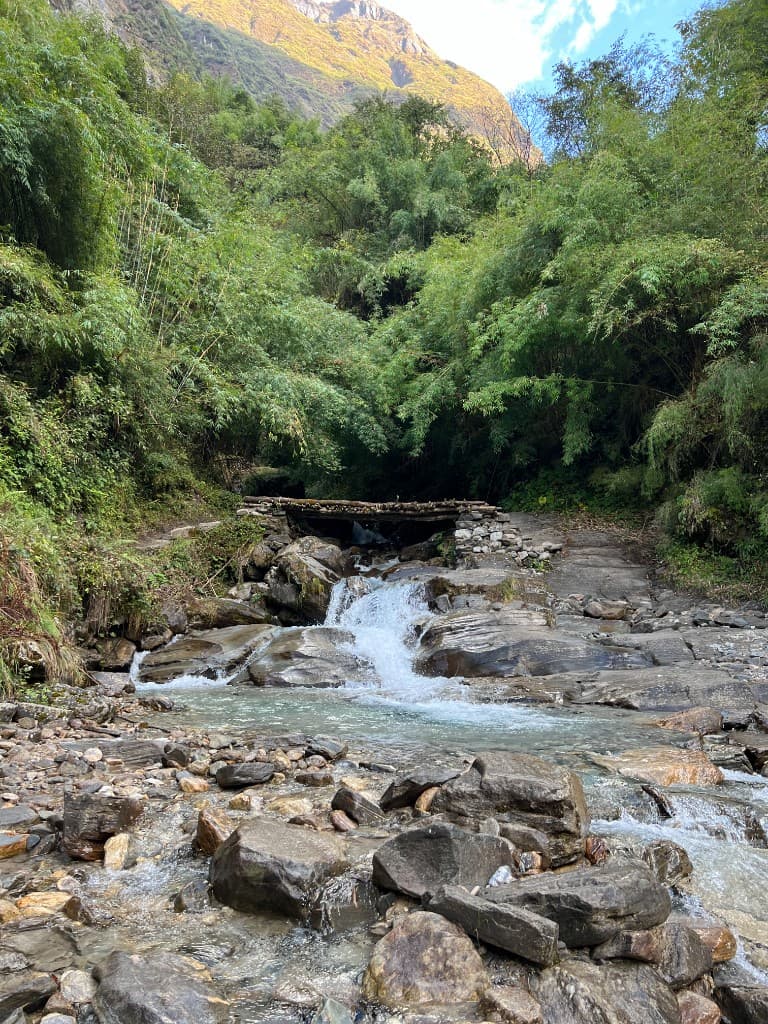
I went to sleep knowing the next day was the real test. Bamboo is not a casual overnight if you intend to sleep at Annapurna Base Camp the following night. It is a launch.
Day 2: Bamboo to Annapurna Base Camp
We asked for an early breakfast. Light food, boots on, back on the trail.
Dovan — the stop I still think about
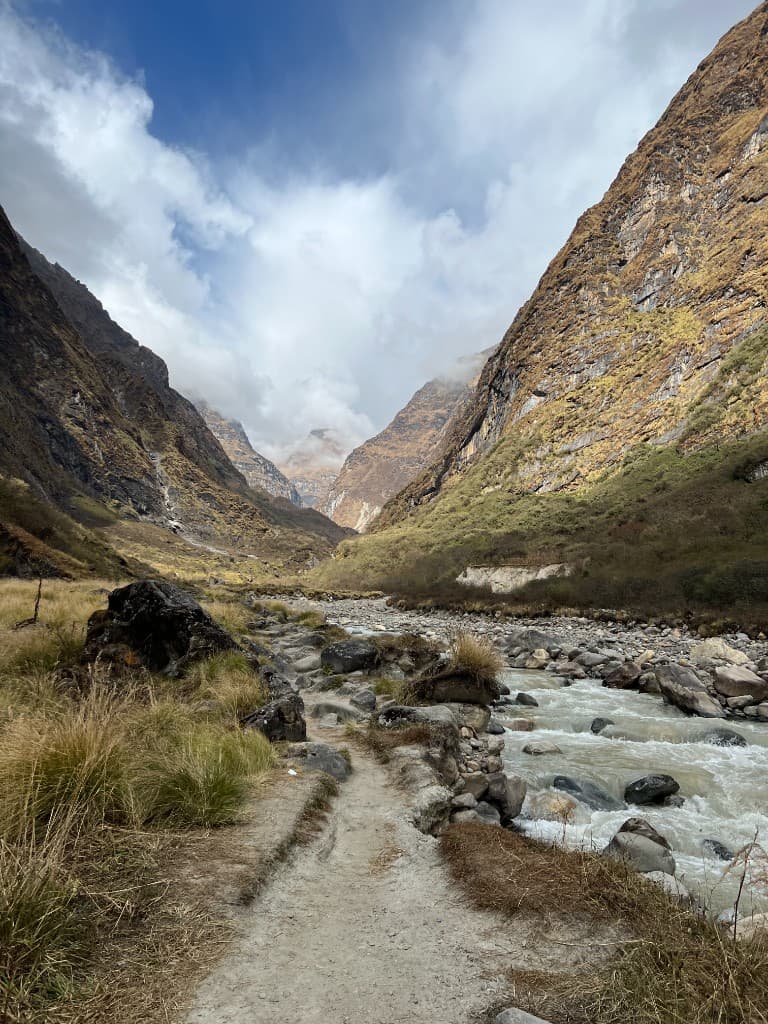
The second day took us through Dovan. The teahouses there felt peaceful and calm in a way that made me slow down even though we could not afford to. I wished we had stayed here — if we had started earlier the day before, we might have. We did not. We ordered black tea, waited for the friends who were still coming up, and then kept walking.
That is one of those trail thoughts that sticks. You cannot collect every quiet village. You can only notice the one you walked through too fast.
Deurali, dal bhat, and the cold coming in
By Deurali we were tired and emptied out. Lunch here was a decision, not a mood. We needed rest and calories if we were going to reach base camp by evening. The air had changed. It was getting colder, chillier, the way it does when you have actually gained altitude instead of just talking about it.
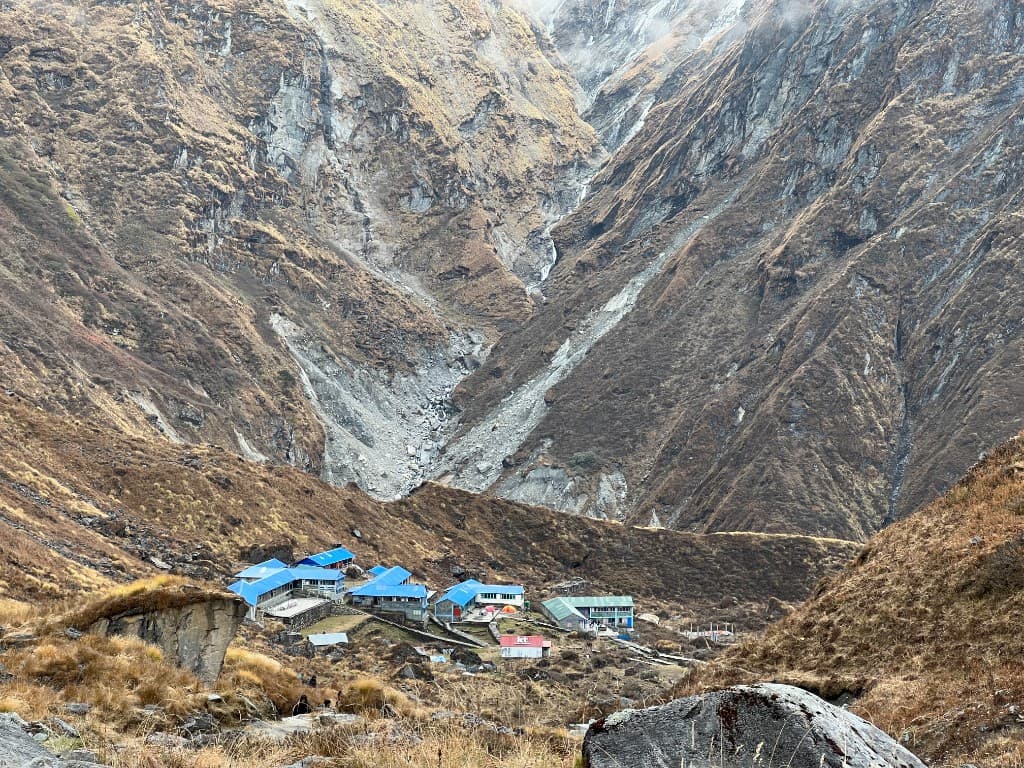
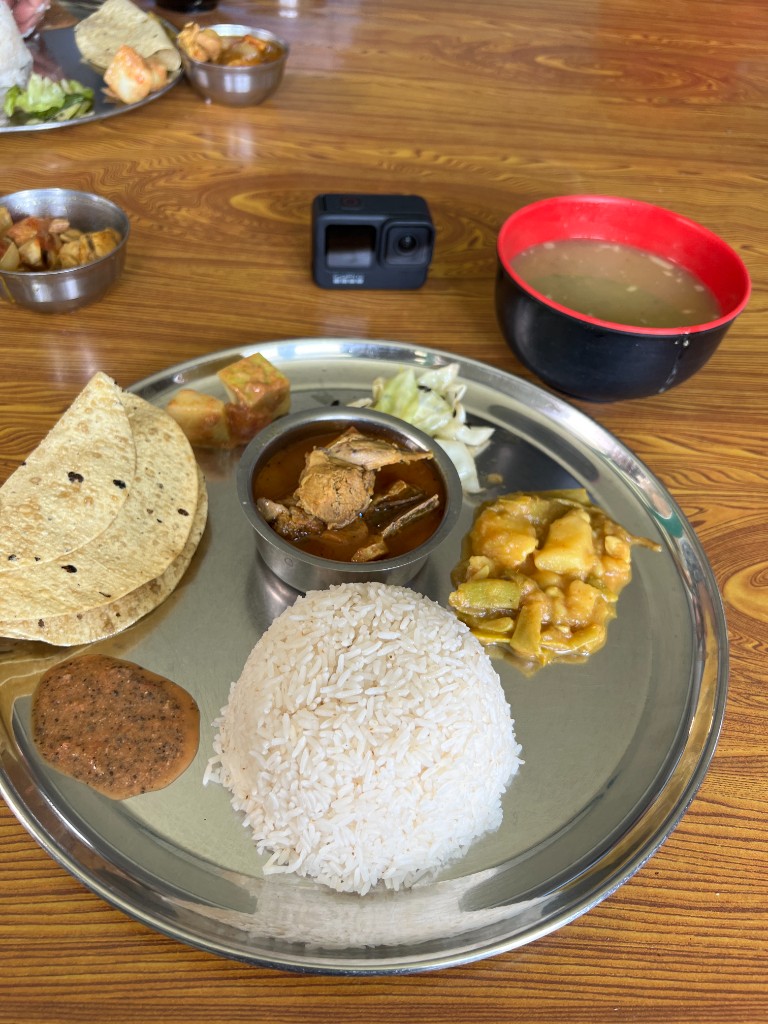
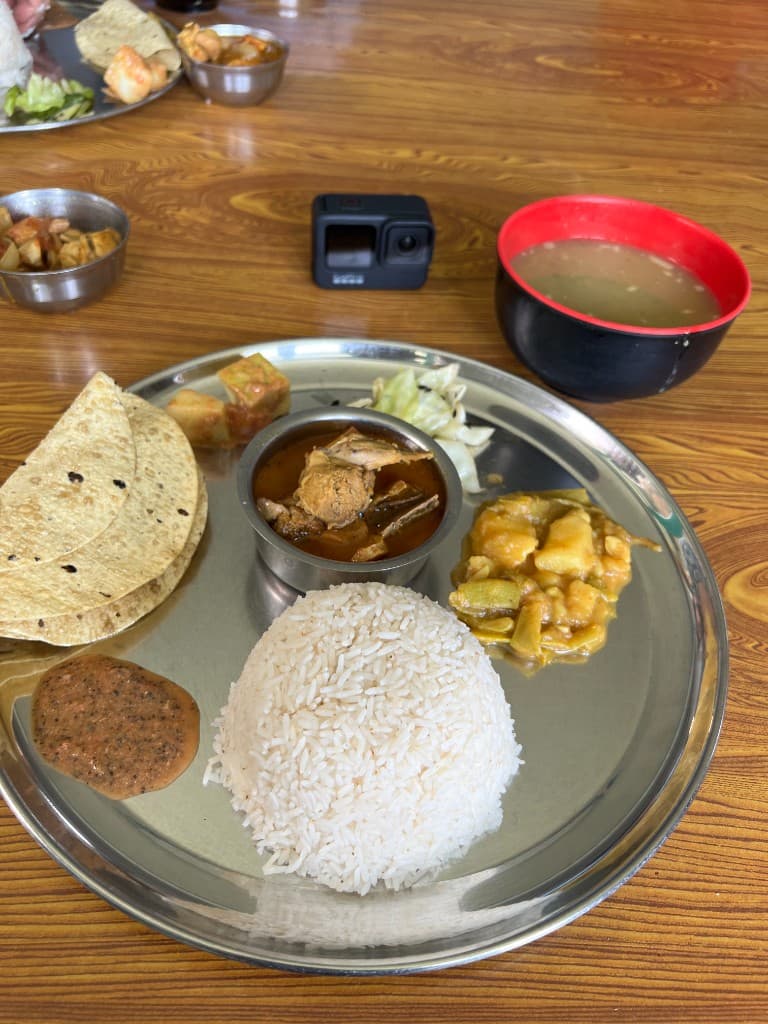
Dal bhat did the job. Rice, lentil soup, curry, a little pickle — the same meal that has carried half the trekkers in Nepal. After enough rest we stood up and continued toward Machhapuchhre Base Camp, then Annapurna Base Camp.
After Machhapuchhre Base Camp, the trail gets longer
Reaching Machhapuchhre Base Camp should have felt like the hard part was over. It did not. The walk toward ABC felt tougher and longer even though there was less altitude left to gain. That mismatch — not much height remaining, still a lot of walking — is the memory I would underline for anyone copying this itinerary.
On the way we used a thin excuse to stop: look around for a frozen pond, take a few pictures, pretend it was curiosity instead of tiredness. Then we continued.
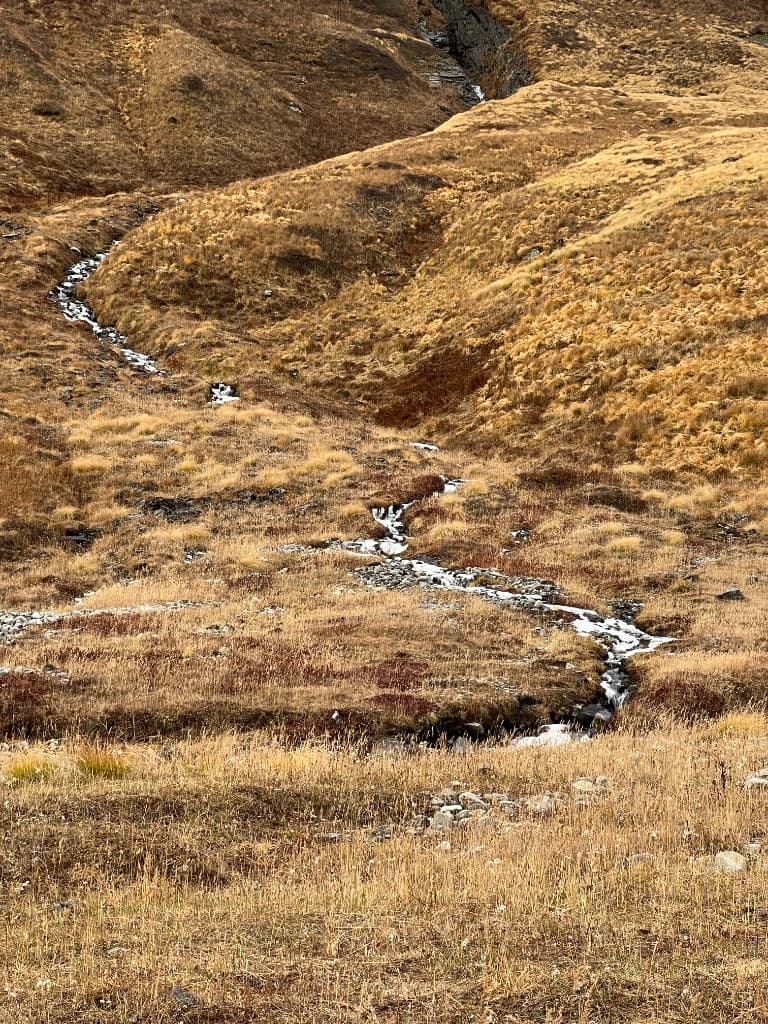
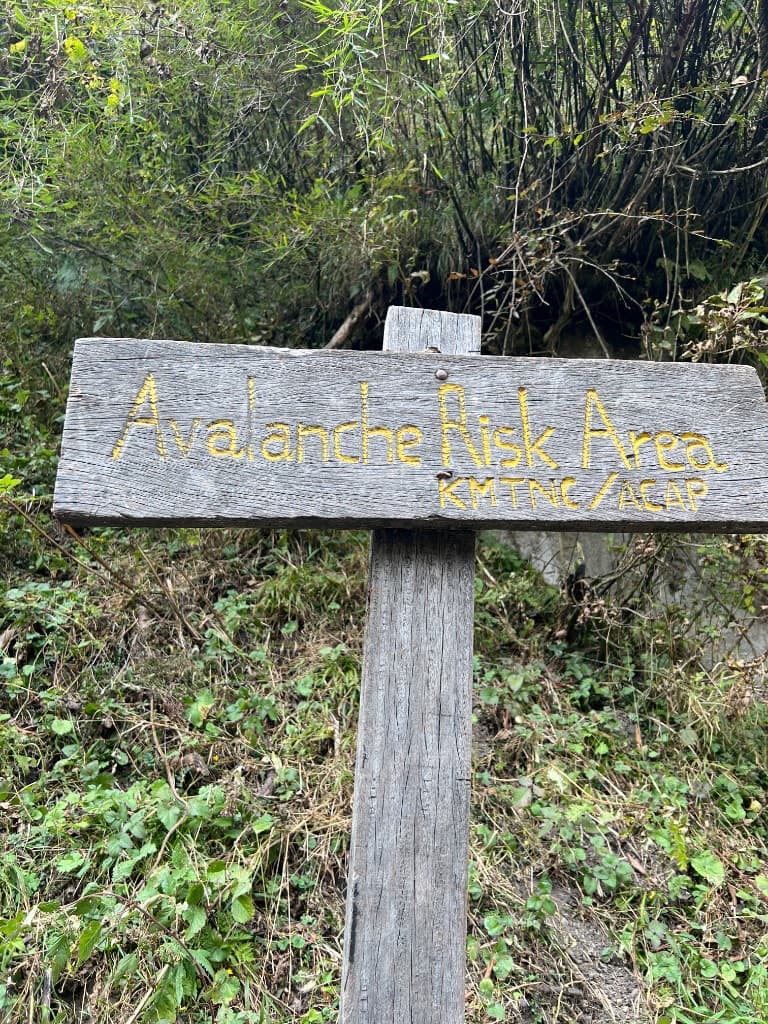
Higher on this stretch the landscape stops pretending to be forest. You get warning signs, open slopes, and the knowledge that this is not a lakeside stroll. One wooden board on the trail is carved simply: Avalanche Risk Area.
Reaching Annapurna Base Camp
We arrived in the evening.
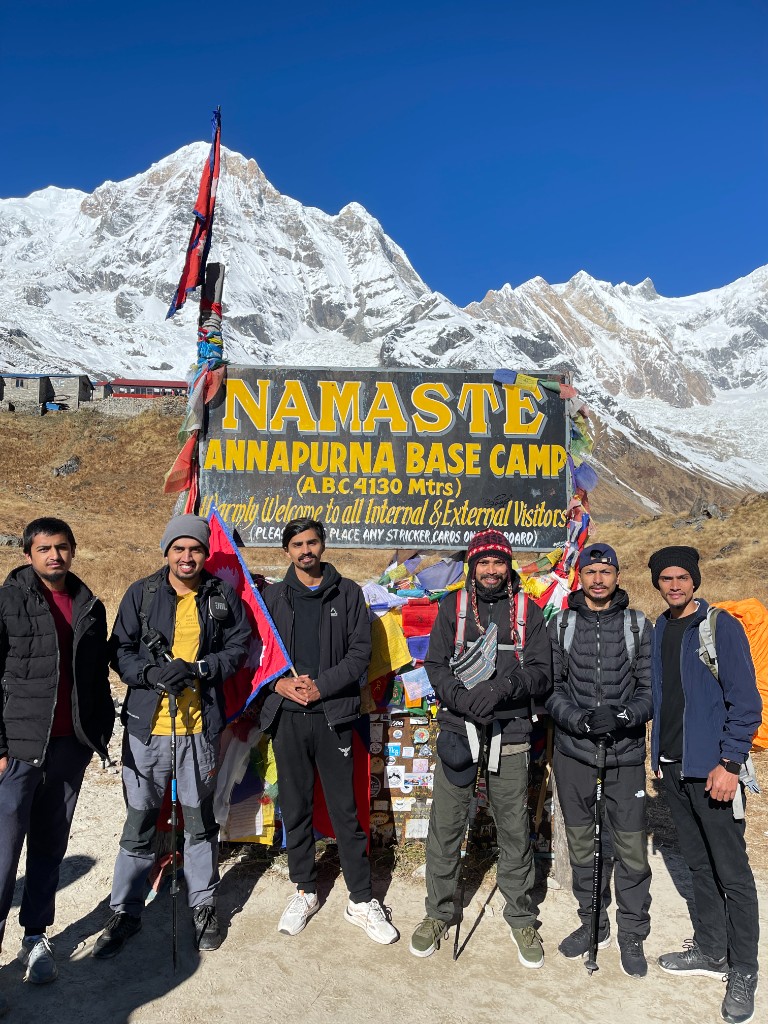
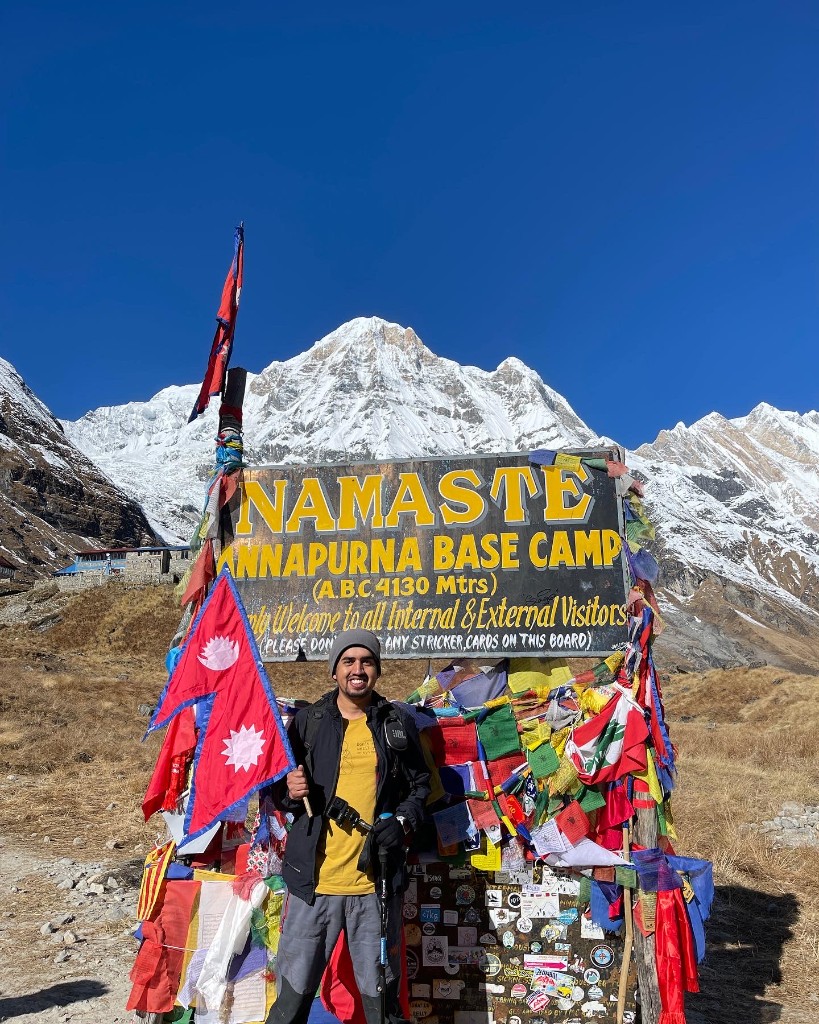
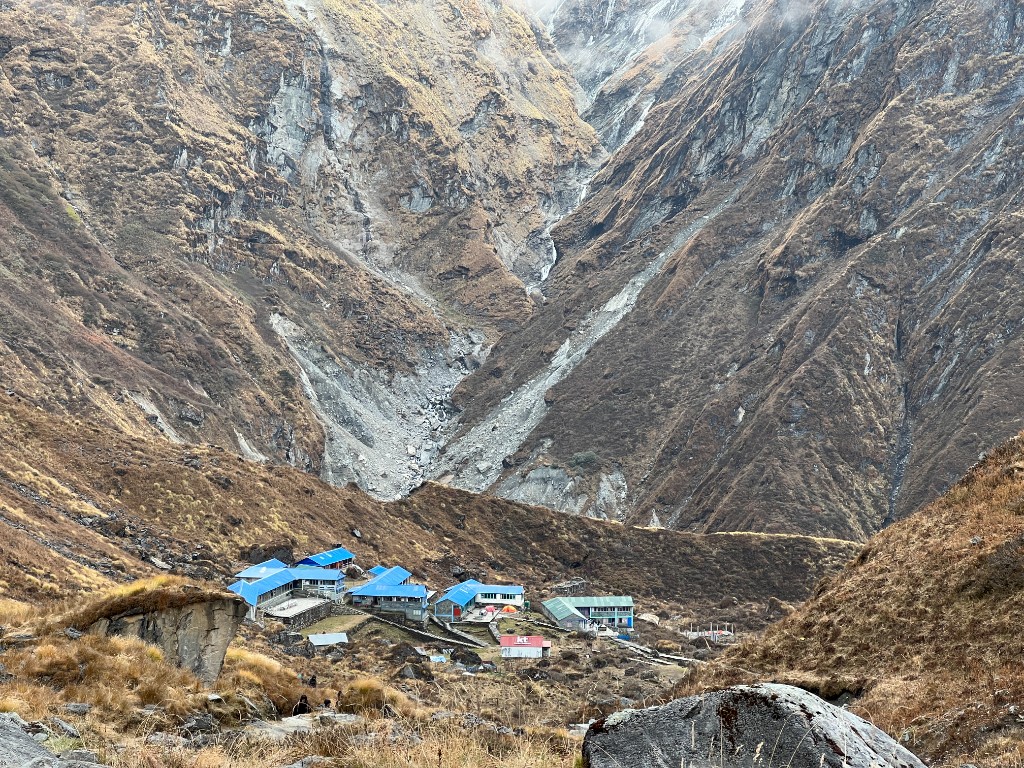
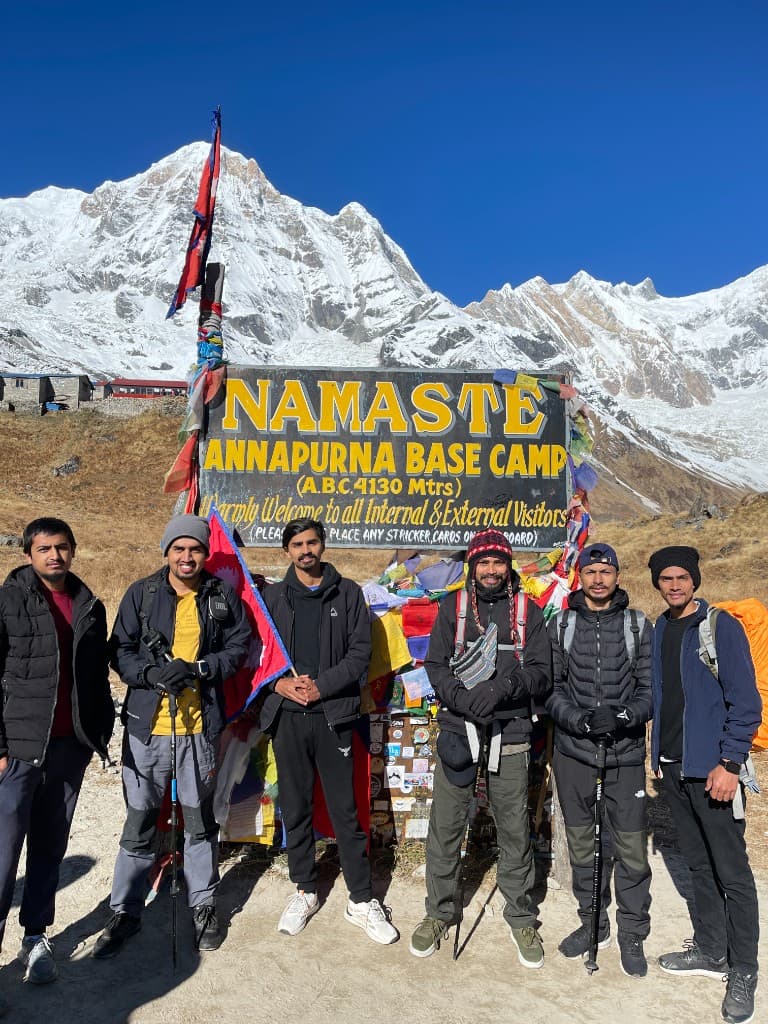
The sign is the thing you have already seen in other people's photos: Namaste, Annapurna Base Camp, A.B.C. 4130 Mtrs. Prayer flags. Stickers people were asked not to put on the board. A Nepali flag on a pole. Behind it, the wall of peaks, partly in cloud the way an evening arrival often is. We were happy, excited, and tired in the same breath. It was a milestone we had covered on the second day of the trek, which is both a proud sentence and a slightly unwise one.
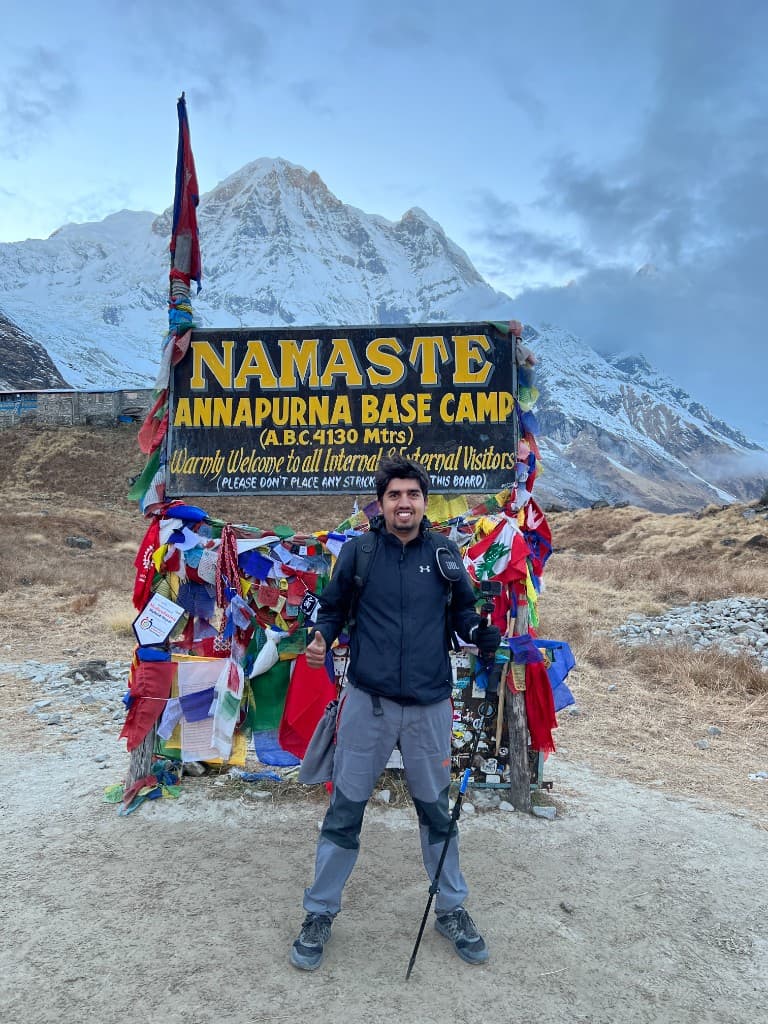
We looked for the teahouse we had booked earlier, had dinner, and went to bed early on purpose. The whole point of sleeping at 4,130 m was the morning: sunrise on a 360-degree Himalayan view.
Standing there, I did not have a speech ready. The feeling was more practical than poetic. We had made the day we designed. Our legs were done. The mountains were still going to be there at dawn, bigger than the slog it took to reach them.
Sunrise at 4,130 Metres
We woke early and went outside to watch the sun hit the peaks.
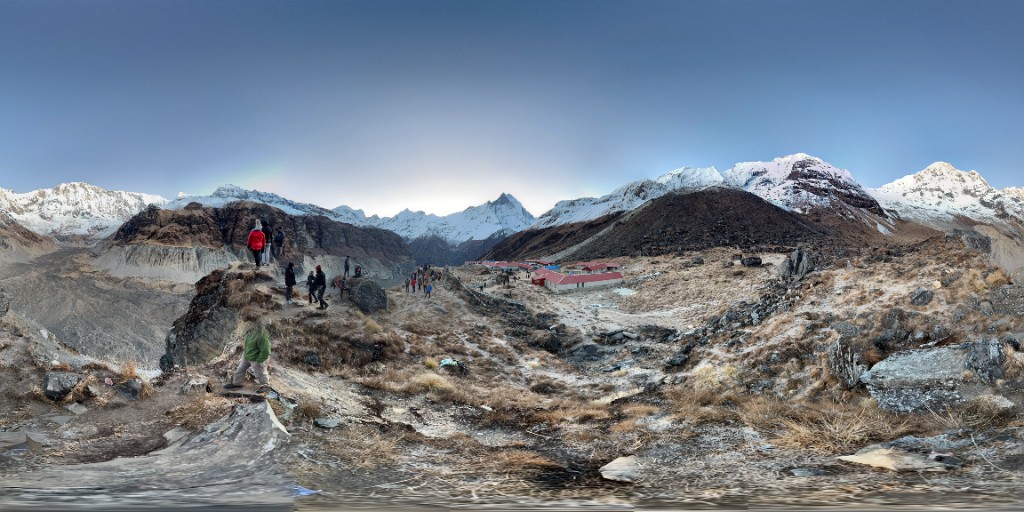
Wow, what a view. That is the unsophisticated sentence, and I am keeping it. The snow took the light first. The valley below stayed in shadow. Tiny lines of other trekkers stood on the rocks, which is useful, because it reminds you how large the sanctuary actually is. A helicopter crossed the face of the mountains at one point — a small red machine against a wall of ice — which only made the scale worse, in the best way.
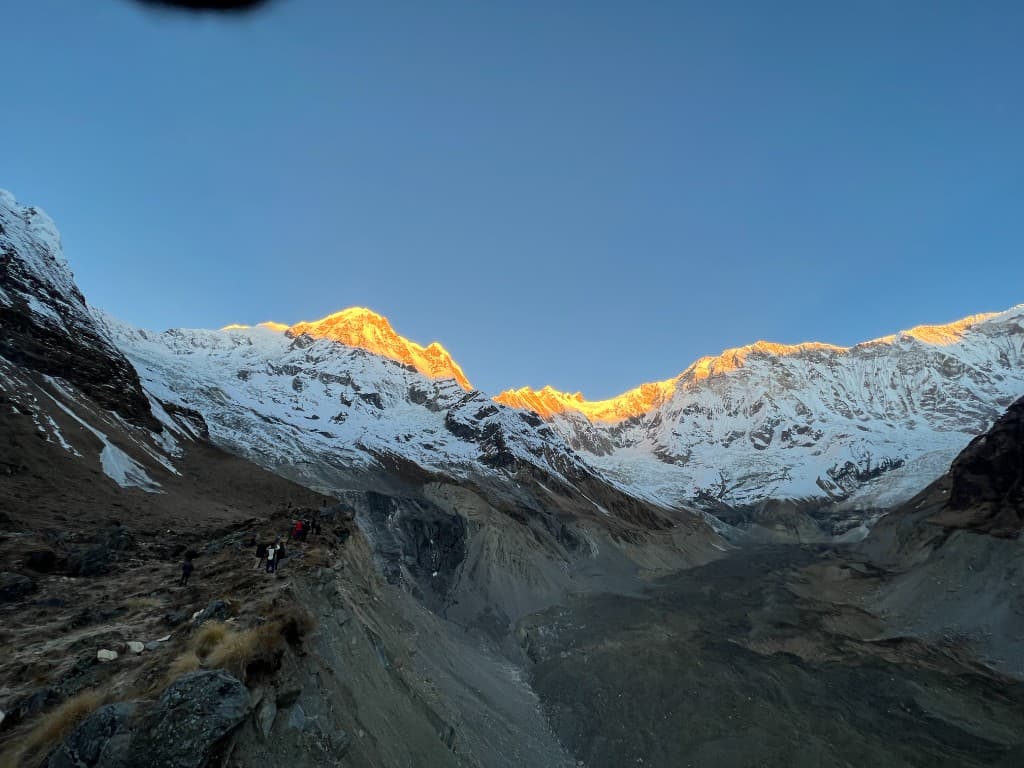
We took too many photographs. Videos. The kind of memory-hoarding you do when you know you will not get this exact morning again. The frost on the grass, the flags, the teahouses with their red roofs sitting in a bowl of peaks.
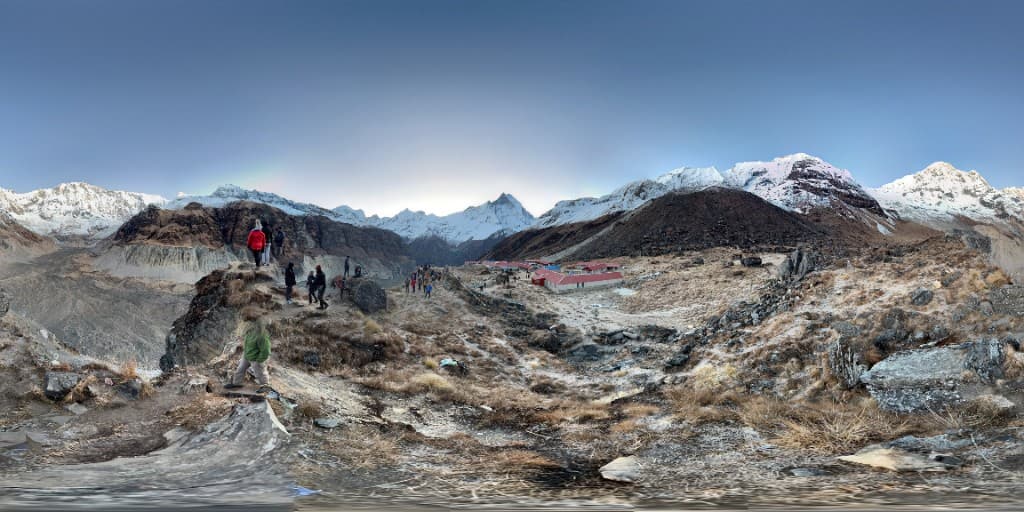
I kept coming back to the same thought from the dark: out of how many people in the world would have reached here to see this with their naked eyes. We live in Pokhara. We still had to walk for it.
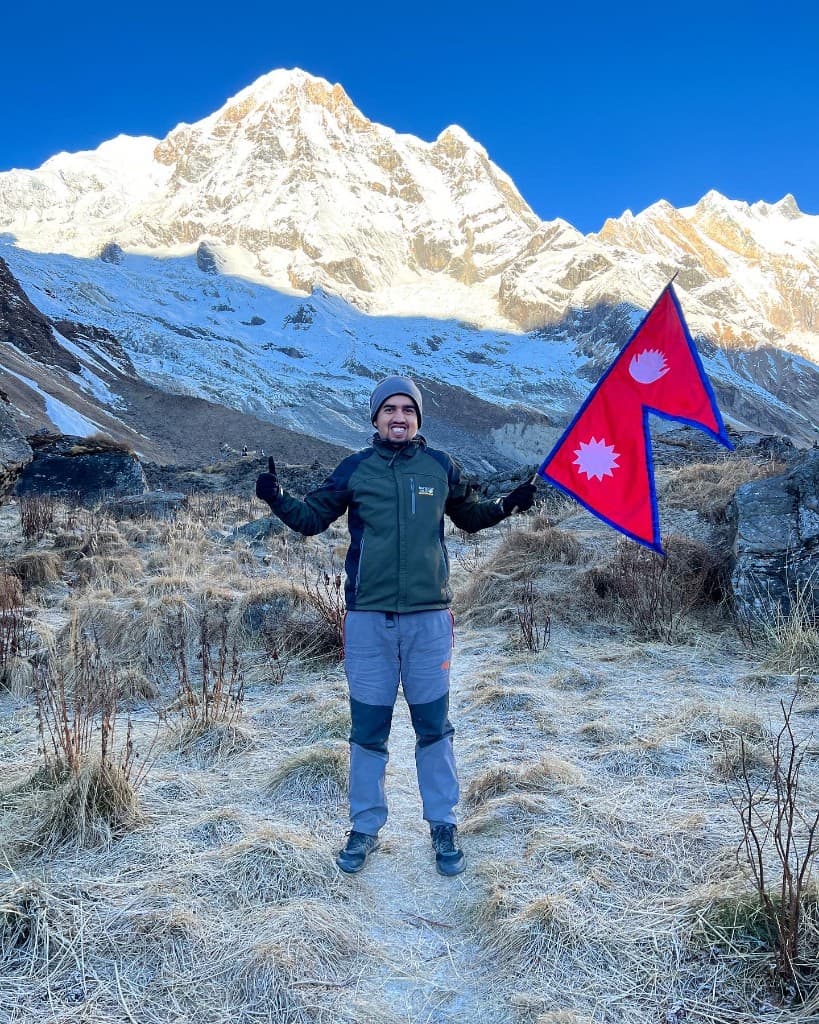
After the sunrise session we had breakfast and turned around. Base camp is a destination. It is also a place you leave while you still have daylight and working knees.
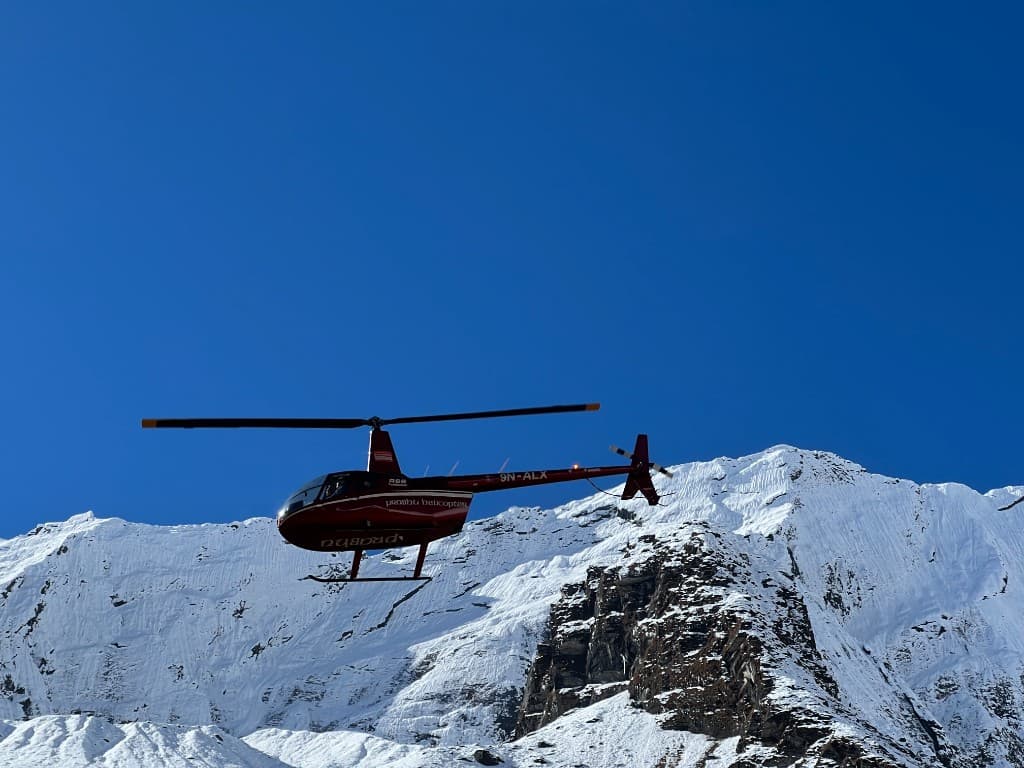
The Descent and the Journey Back
Going down is not the same walk in reverse. Your pack feels different. Your brain is looser. Your knees file a complaint.
Lunch in Dovan, night in Lower Sinuwa
We had lunch at Dovan — the calm stop I had already filed under "next time, sleep here" — and then chose to spend the night at Lower Sinuwa. The logic was simple: leave a short final day to the bikes. Dinner early. Bed early. The pattern of the whole trek, really. When you are short on festival time, you treat sleep like logistics.
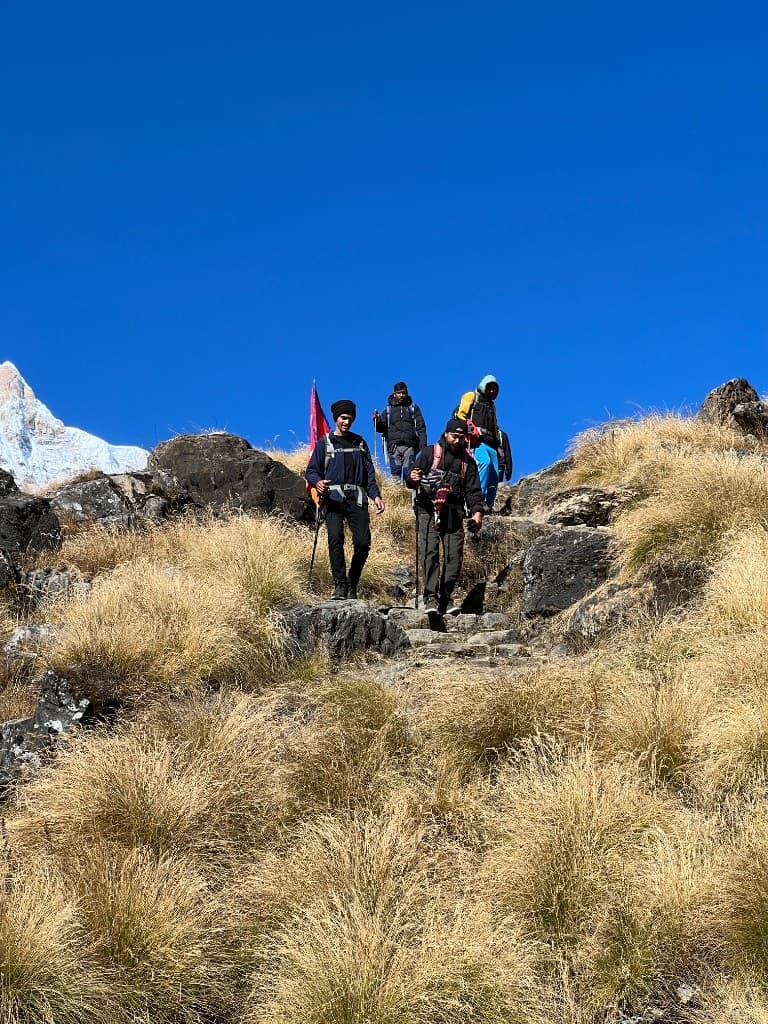
The uphill that almost won
The next morning, after a heavy breakfast, we headed for the parking.
The uphill walk from Selbu Bridge back to Chhomrong was the toughest part of the entire Annapurna Base Camp trekking route for us. Not the arrival at 4,130 m. The climb you have to do when you are already used up. We could barely walk. It took longer than we expected. Body aches, tiredness, the slow maths of one more stone step.
If you only remember one physical warning from this story, remember that climb.
Jhinu Hot Spring, then the road home
After all of that, we did the obvious, correct thing: a hot spring bath at Jhinu. We stayed around an hour. Heat on sore legs is not a small pleasure after four compressed days. Then we walked to the parking, collected the bikes, and started back toward Pokhara. We had lunch in Nayapul.
The mountains were behind us. The festival was still ahead. That was the deal we had made at the beginning.
What the Annapurna Base Camp Trek Taught Me
I did not come home with a new personality. I came home with a few specific lessons.
Time pressure changes a trail. Dashain made us efficient. It also made us skip Dovan, push ABC into day two, and meet the Chhomrong climb on empty legs. A longer Annapurna Base Camp trek itinerary is not weakness. It is how most people should do this.
Friendship is a pacing tool. Six people never move as one. We waited with black tea in Dovan. We used a frozen pond as an excuse to let the group catch its breath. The photos at the sign are six people. The walk is six different energy levels pretending to be a unit.
The last kilometres can feel longer than the altitude chart. After Machhapuchhre Base Camp I kept thinking we were almost there. We were, on paper. The trail disagreed.
Simple food is strategy. Chhomrong lunch after the first climb, dal bhat in Deurali, a heavy breakfast before the last day — those meals did more for us than any motivational sentence.
The view is the point, and it is also brief. You walk two hard days for a morning. You take the pictures. You go down. That ratio is not a complaint. It is why the sunrise stays.
Practical Information for Future Trekkers
The story above is our trek. The notes below mix that experience with general facts about the ABC trail. Do not copy our pace unless you already know your fitness, you are travelling as a tight group, and you have a real reason to compress the days.
For booking and the standard package overview, see Annapurna Base Camp Trek. For cost, permits, and the classic 7–12 day plan, use the complete ABC trek guide.
Annapurna Base Camp Trek Difficulty
General: The ABC trek is usually rated moderate. You do not need technical climbing skills. You do need fitness for long uphill days, stone steps, and consecutive walking.
Our experience: A four-day round trip from Jhinu to ABC and back is harder than the moderate label suggests. The difficulty spiked in two places: the day-two push from Bamboo to base camp, and the return climb from Selbu Bridge to Chhomrong. If this is your first Himalayan trek, give yourself more nights.
Annapurna Base Camp Altitude
Annapurna Base Camp sits at 4,130 metres (about 13,550 feet). Machhapuchhre Base Camp is the last major stop before that bowl of peaks. At that height, altitude sickness is possible even on a "moderate" trail. Our group kept moving and slept at ABC for one night; a slower itinerary is the safer pattern for most visitors.
How Many Days Does the ABC Trek Take?
General: Most itineraries take 7–12 days round trip from Pokhara, especially if you include Ghorepani and Poon Hill.
Our experience: 4 days / 3 nights (Bamboo, ABC, Lower Sinuwa), starting from Pokhara on 22 October 2022 and riding to Jhinu because of Dashain. It worked. It was also rushed. If you have the leave days, spend them.
Best Time for Annapurna Base Camp Trek
October–November and March–May are the usual windows for clearer skies. We started on 22 October 2022, in Dashain season — busy, festive, and a reason many Nepali trekkers are on a clock. Late October can deliver the views we got at sunrise. It can also mean fuller teahouses, which is why we had booked ABC lodgings in advance.
How to Reach Annapurna Base Camp From Pokhara
Classic start: drive Pokhara → Nayapul (or Ghandruk), then walk.
What we did: motorbikes Pokhara → Sarangkot → Naudanda → Nayapul → Birethanti → Jhinu, then walk from the Modi River suspension bridge. Parking at Jhinu cost us NPR 150 per bike per night. The Jhinu start shortens the approach and puts you on the Chhomrong climb immediately.
What Should You Pack?
We did not keep a published packing list, so I will not invent one from our bags. For a standard ABC kit — layers, broken-in boots, poles, a warm sleeping bag, headlamp, cash in NPR — follow the packing section in the ABC trek guide.
What I can stand behind from this trip: you will want warm layers by Deurali, and you will want a change of clothes you do not mind soaking at Jhinu Hot Spring on the way out.
Accommodation and Food
Teahouse trekking all the way. We slept in Bamboo, at ABC (pre-booked), and in Lower Sinuwa. Meals that actually appear in this story: lunch in Chhomrong, black tea in Dovan, dal bhat in Deurali, dinner at ABC, lunch in Dovan on the way down, a heavy breakfast in Lower Sinuwa, lunch in Nayapul.
Lodge names and room rates: add yours when you book. Prices rise with altitude. Carry cash.
Physical Preparation
General: Long walks with a pack, stair climbing, and a few back-to-back hiking days before you leave will help.
Our experience: Living in Pokhara does not replace trail fitness. The Chhomrong return climb still reduced us to a crawl. Train the muscles you will use on the way down as well as the way up.
Important Tips From My Experience
- Book the ABC teahouse if you are going in a festival window.
- Start early on the long day. We asked for breakfast before we needed it.
- Do not underestimate MBC → ABC. Less altitude left does not mean a short hour.
- Save legs for Selbu Bridge → Chhomrong on the return.
- If your schedule allows, sleep in Dovan. I still wish we had.
- The Jhinu hot springs are not a tourist afterthought. After this itinerary they are medical.
- Bikes to Jhinu save approach time. They do not save you from the walk.
What I Wish I Knew Before Starting
I wish I had treated day two as two days. I wish I had known — not in theory, in the legs — that the scenic victory at 4,130 m would not be the hardest hour. The hardest hour was later, on a climb we had already done in the opposite direction, when nobody had spare patience.
I also wish I had given Dovan a night. Some places on a trekking route are useful. A few are actually pleasant. Dovan felt like the second kind.
FAQ
How difficult is the Annapurna Base Camp Trek?
Moderate on a standard 7–12 day itinerary; significantly harder if you compress it into four days the way we did. The stone steps, the altitude, and the return climb to Chhomrong are the parts that surprise people.
How many days does the Annapurna Base Camp Trek take?
Plan 7–12 days from Pokhara if you can. We did it in four days from Jhinu, starting 22 October 2022, because of Dashain. That is a fit-group, short-window version — not the default.
What is the altitude of Annapurna Base Camp?
4,130 metres (13,550 feet), as marked on the welcome sign.
Do I need a guide for the ABC Trek?
Permits are required for the Annapurna Conservation Area. A guide is strongly recommended for most visitors, especially if you are new to Nepal trekking or walking in changing weather. I went with five friends from Pokhara; your situation may be different.
What is the best time to do the Annapurna Base Camp Trek?
October–November and March–May. We started 22 October 2022, walked in Dashain season, and got a clear sunrise. Festival dates can make lodging tighter.
Is Annapurna Base Camp suitable for beginners?
Yes, on a sensible itinerary with time to sleep lower and walk shorter days. A two-day push from Bamboo to ABC is a poor beginner plan. Start with the full ABC guide or a shorter trek such as Mardi Himal if you want a gentler first Himalayan test.
Can I start the ABC trek from Jhinu instead of Nayapul?
Yes. Jhinu (often with the hot springs) is a common shortcut into the Chhomrong–Bamboo–ABC corridor. We biked there from Pokhara, parked overnight, and started walking from the Modi River bridge.
Is there a hot spring on the Annapurna Base Camp route?
Jhinu Hot Spring, near the trailhead we used. We sat in it for about an hour on the last day. It is the correct last paragraph of a compressed ABC trek.
Conclusion
I keep two pictures of this trek in my head.
One is the morning: gold on the snow, frost on the grass, six of us taking more photos than anyone needed, a helicopter dragging a tiny sound across a silent wall of peaks.
The other is the climb back to Chhomrong, when we could barely walk and the milestone at 4,130 m already felt like yesterday.
Both are the Annapurna Base Camp trek. The view is what you came for. The steps are what you actually did. For the motion, the cold air, and the group on the trail, watch the ABC trek vlog.
If you are planning this from Pokhara — or you live here and have been saying "next season" for too many seasons — give the trail enough days if you can. If you cannot, at least give it honest legs, an early breakfast, and a booking at base camp. Then go stand in the dark and wait for the sun.
For more first-hand walks and Pokhara plans, keep reading on HolidayKosh: the Annapurna Base Camp planning guide, North ABC and Pancha Kunda, Kapuche Glacier Lake, and the Pokhara destination page.